
Baby's Menu - ABC of Nutrition During Pregnancy
Pregnancy is an incredible time not only for the expectant mother but also for her body. Above all, it needs more energy and nutrients. Our dietitian, Natalia Parulska, M.A..
Not for two, but for two
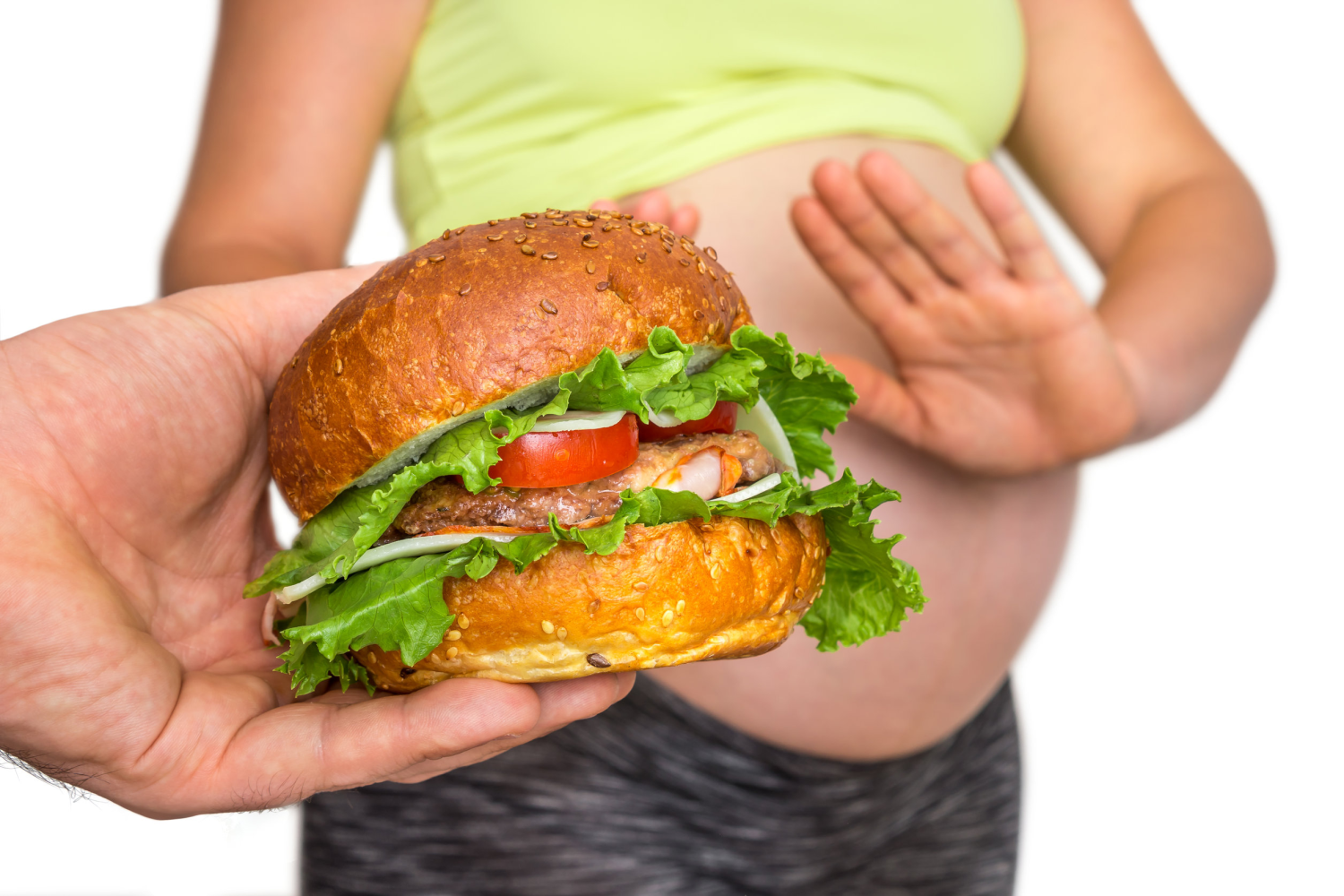
The basic principles of a pregnancy diet are not much different from those of a healthy diet. Expectant mothers should choose the least processed foods from all food groups – lean meats, fish, dairy products, eggs, legumes, whole-grain cereals (groats, unsweetened cereals, rice, whole-grain pasta, good-quality sourdough bread), vegetables, and fruit. Pregnancy is associated with increased energy expenditure. In the first trimester, this is practically negligible, while in the second trimester, the energy value of the daily menu should increase by approximately 350 kcal, and in the third trimester by almost 500 kcal. A rough guideline is that in the second trimester, a woman should eat an additional amount of breakfast daily, and in the third trimester, the same amount as for dinner (assuming a healthy diet). Eating for two certainly won't improve the baby's nutrition. The quality of food consumed during pregnancy is definitely more important.
Proper weight gain is important
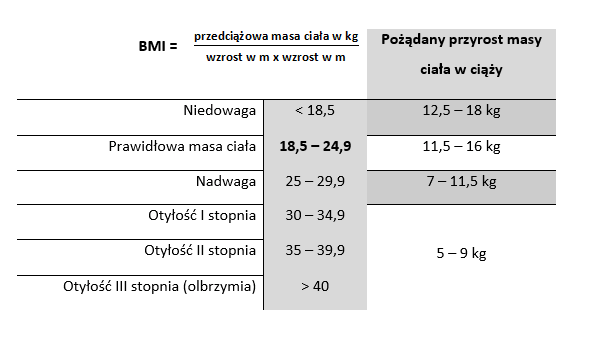
Weight gain during pregnancy is necessary for proper development. What does this mean? A new organism is forming, which by the end of pregnancy will weigh approximately 3.5 kg, the uterus 1 kg, the placenta 0.8 kg, amniotic fluid 1.2 kg, the breasts will increase by approximately 0.5 kg, plasma volume will increase by 1.5 kg, and 1.5 kg will be water retained in the body. This adds up to approximately 10 kg, with the remaining kilograms being fat tissue. Women who gain 30 kg during pregnancy primarily accumulate fat. The number of kilograms a woman should gain depends on her pre-pregnancy weight. Below is the BMI (Mass Index) formula, which can be used to estimate the desired weight gain.
Hygiene and food safety during pregnancy
During pregnancy, you should pay special attention to it. I've summarized what you should absolutely avoid and what issues you should consult your doctor about.
- You should absolutely avoid: raw meat, e.g. steak tartare, raw or undercooked fish and seafood, e.g. sushi, undercooked and raw eggs (e.g. homemade mayonnaise, kogel-mogel, tiramisu), unpasteurized milk and dairy products, food from uncertain sources (fast food, home-made cold cuts processed at too low temperatures, organic food, e.g. soft cheeses made from unpasteurized milk), ready-made delicatessen products, unwashed fruit and vegetables, raw sprouts.
- The refrigerator temperature should be set low (below 4ᵒ C), perishable foods, such as cold cuts, should not be stored there for longer than 4 days, and the refrigerator should be cleaned regularly, for example, once a week before placing larger purchases in, to prevent the growth of bacteria, fungi, and molds. Wash cutting boards, knives, countertops that come into contact with raw meat, and your hands especially thoroughly after handling raw meat or eggs.
- Alcohol in any form is prohibited during pregnancy, and you should also avoid caffeine – coffee, strong teas, cola, energy drinks.
- The consumption of herbs (e.g. herbal teas) should also be consulted with the doctor supervising the pregnancy.
- You should avoid sweetened drinks, flavored waters, smoked foods, liver, fish with the highest level of contamination (salmon and Baltic herring, shark, swordfish, mackerel, tuna), fast food, powdered soups and sauces, stock cubes, delicatessen products, chips, crackers, biscuits, wafers, chocolate-like products, and sweeteners.
Filling up doesn't always mean satiating the body – it's important to remember this, not only during pregnancy. If an expectant mother provides her body with the right amount of nutrients in her diet, she will also provide them to her baby. It's best to learn about mother and baby nutrition only from reliable sources, and to utilize the expertise of a dietitian in Lublin , so you can truly enjoy this wonderful time of motherhood.

Frequently asked questions – FAQ
How to eat during pregnancy?
A pregnant diet should be varied and based on minimally processed foods. It's best to choose vegetables, fruits, whole-grain cereals, lean meats, fish, eggs, dairy products, and legumes.
Do you have to eat for two during pregnancy?
No. During pregnancy, the quality of your diet is more important than eating "for two." Energy needs increase primarily in the second and third trimesters, so it's important to eat sensibly—for two, not for two.
How much weight can you gain during pregnancy?
Healthy weight gain during pregnancy depends on factors such as pre-pregnancy weight and BMI. It's important to monitor this during doctor visits, as both too little and too much weight gain may require consultation.
What products should you avoid during pregnancy?
During pregnancy, you should avoid raw meat, raw or undercooked fish and seafood, raw eggs, unpasteurized milk and dairy products, unwashed vegetables and fruits, raw sprouts and food from uncertain sources.
Can you drink coffee while pregnant?
During pregnancy, you should limit caffeine, which is found not only in coffee but also in strong tea, cola, and energy drinks. It's best to discuss the amount of caffeine with your doctor.
Is alcohol allowed during pregnancy?
No. Alcohol in any form is contraindicated during pregnancy. If you have any concerns about your diet or beverages, consult your doctor.
How to ensure food safety during pregnancy?
It's important to thoroughly wash fruits and vegetables, keep your hands, knives, countertops, and boards clean, store food at the right temperature, and clean the refrigerator regularly. Raw meat and eggs require special care.
Is it worth seeking help from a dietitian during pregnancy?
Yes. A dietitian can help tailor a meal plan to the needs of the expectant mother, her stage of pregnancy, body weight, test results, and any ailments. It's worth using trusted sources of nutrition information.