
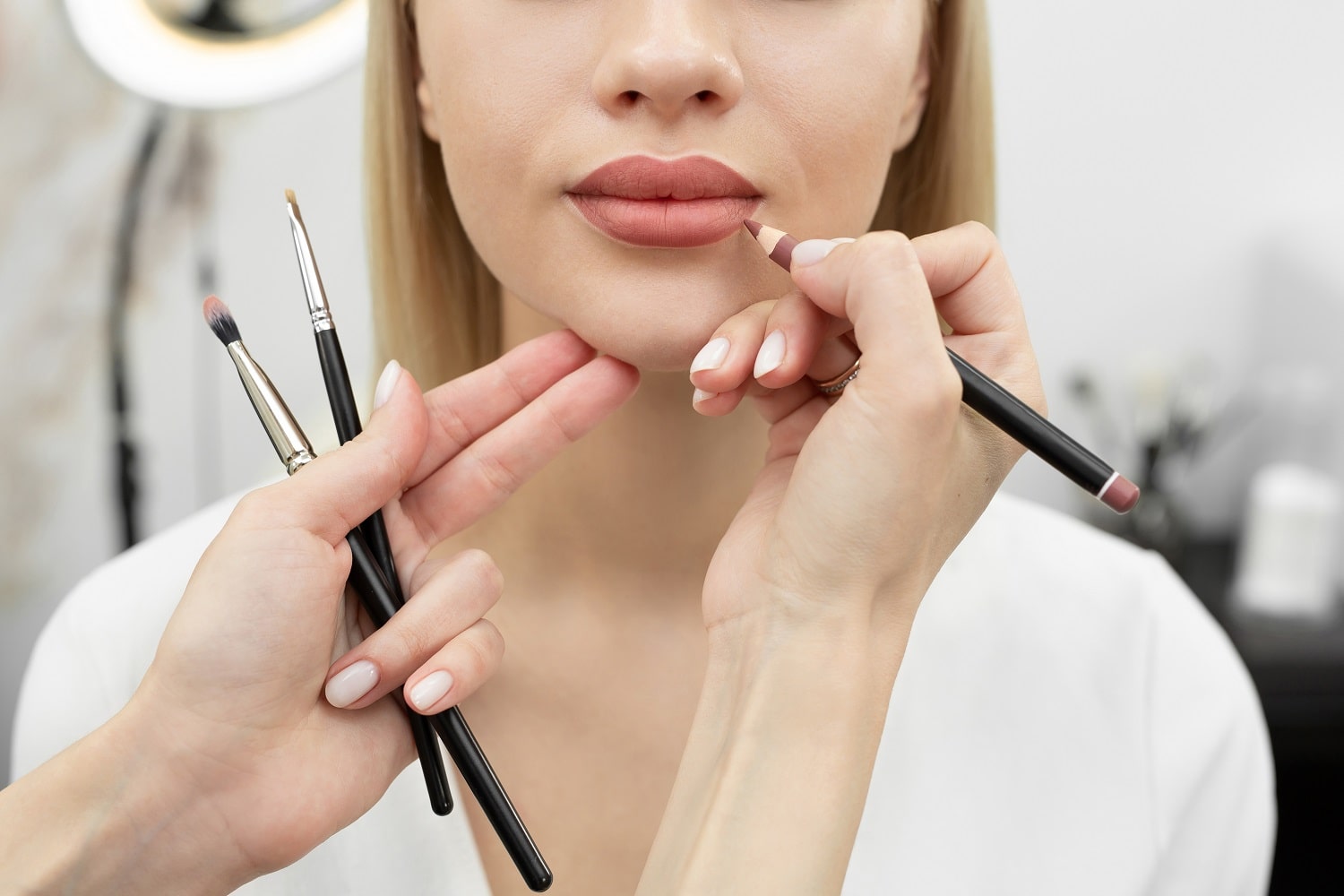
Permanent makeup. Eyebrows, eyelids, lips – what to choose? Why is it worth it?
Perfect lines, professionally defined eyebrows, or your favorite lip color every day, without a single minute of effort. That's why it's worth considering permanent makeup in Lublin. This is the most obvious benefit. But there are more: if you're an athlete, your hair has lost its color with age, you have health problems, or you're simply hypersensitive to traditional makeup, then permanent makeup is a great solution.
See what you gain in practice when you decide on permanent makeup?
- It highlights natural beauty
- It conceals beauty imperfections
- It adds self-confidence
- Waterproof, suitable for all seasons, in all weather conditions
- Corrects scars
Before making a decision, it's worth learning more about it. That's why we'll try to answer the most important questions. We talk about permanent makeup with qualified linergist Katarzyna Majbrodzka,M.A.
What is permanent makeup?
– Permanent makeup is a cosmetic procedure that uses micropigmentation to enhance the color and shape of facial features. Permanent makeup enhances eyebrows, eyes, and lips. Depending on your needs and preferences, it can subtly enhance beauty and be virtually unnoticeable, or be surprisingly intense.
There are several methods for applying permanent makeup. Generally speaking, the procedure involves injecting pigment into the papillary layer of the skin, which lies at the junction of the epidermis and dermis. The device resembles a pen with a needle at the end, which makes nearly 200 injections per second.
How to prepare for a permanent makeup treatment?
– A consultation with a cosmetologist is crucial, and is recommended no later than one week before micropigmentation. This allows for the exclusion of contraindications, an allergy test, and treatment planning. It's important to note that after applying makeup, swelling and redness may occur, lasting from 1 to 7 days.
Please provide more information on contraindications. Is permanent makeup safe for health?
– Permanent makeup is safe. However, like any cosmetic procedure, it has certain contraindications. These include pregnancy, cancer, diabetes, psoriasis, inflammation, and infections (e.g., herpes). You should also be careful if you are taking certain medications that prolong wound healing.
Is micropigmentation very painful? Are there any side effects?
"The pain perception is highly individual. Permanent makeup is performed on extremely sensitive areas of the face. Professional salons use anesthetics. But of course, you should be aware that some discomfort will occur. It all depends on your pain tolerance. And when it comes to side effects, clients are certainly informed about them before the procedure, such as allergies to dyes.".
Are there any special care rules that need to be followed after permanent makeup?
– It is not recommended to take aspirin, drink alcohol, or consume caffeinated beverages for 24 hours before and after permanent makeup. Cosmetic use should be limited for approximately two weeks after the procedure. It is best not to expose the micropigmented areas to prolonged exposure to water. During the healing process, direct sun exposure should be avoided for approximately one month. It is absolutely necessary to avoid using a tanning bed for at least 10 days, and swimming in a pool or sauna for at least 7 days. Sun protection with an SPF of 50+ should be used until the full regeneration process is complete (at least 28 days).
After the treatment, the color may be up to 50% darker than the desired result, and it may take up to 10 days to lighten. After 30-45 days, a touch-up is usually necessary, so the entire treatment procedure, post-treatment care, and skin and bodily reactions will be repeated.
How long does permanent makeup last?
You don't have to worry about being stuck with your current makeup choice for the rest of your life. It lasts on your skin for some time, depending on your natural skin tone, the length and intensity of sun exposure, and the skincare products you use. These can accelerate the fading of permanent makeup. The intensity of the makeup also matters; more subtle and natural-looking makeup will require touch-ups more quickly than stronger, more pigmented ones.
Typically, permanent makeup lasts from 18 months to 3 years.
The roots of permanent makeup date back to the early 20th century, and today it is a safe, comfortable and record-breaking beauty care method in cosmetology.

A Glance at History
- Ancient Egypt – women stained their lips with ochre and decorated their bodies with available minerals and natural substances, often harmful and poisonous
- Ancient Greece – women colored their lips with wax cream with the addition of red plant pigment and highlighted their eyes with charcoal
- 3300 BC China – first tattoos: using bamboo rods and thin silk fibers, the skin was punctured, injecting dye into it; the needle was attached so that it protruded from the bamboo rod, and then a cotton thread was wrapped around it so that the needle's length could be adjusted during dye implantation
- 1911 – the first medical pigmentation of scarred lips and eyelash line tattoo
- 1984 – micropigmentation of lines on the upper eyelids for purely cosmetic purposes, performed in the United States by surgeon Gior Angres
- 1992 – first pigmentation using a professional permanent makeup device
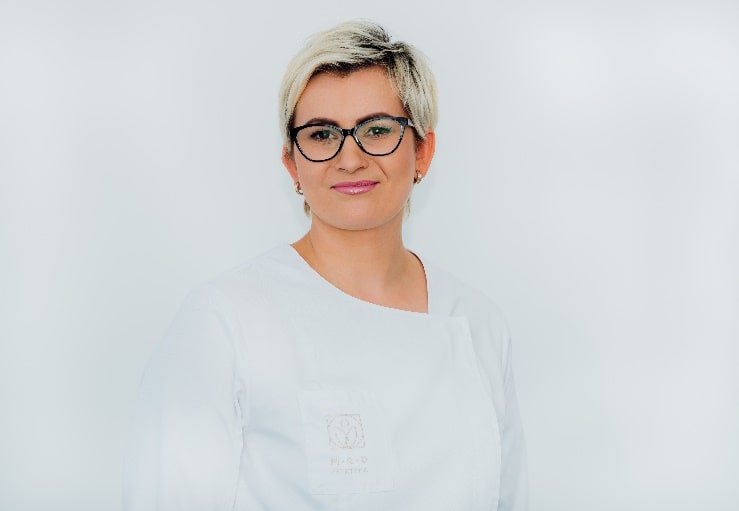
Katarzyna Majbrodzka, M.A.
A certified cosmetologist and linergist, she has long been passionate about permanent makeup. She believes that well-executed makeup should enhance natural beauty and correct any imperfections. She is recognized for her professional approach and inner peace.
Frequently asked questions – FAQ
What is permanent makeup?
Permanent makeup is a cosmetic treatment using micropigmentation. It involves injecting pigment into the skin to enhance the color and shape of eyebrows, eyelids, or lips.
What can be emphasized with permanent makeup?
Permanent makeup is most often applied to the eyebrows, eyelids, and lips. It can subtly enhance natural beauty, correct asymmetry, define facial features, or visually thicken the lash line.
Who is permanent makeup for?
Permanent makeup can be a solution for people who want to save time on daily makeup, play sports, have light or sparse eyebrows, are hypersensitive to traditional makeup, or want to correct minor beauty imperfections.
How to prepare for permanent makeup?
A consultation with a cosmetologist is recommended before the procedure, preferably no later than one week before micropigmentation. During the consultation, contraindications can be ruled out, the procedure can be planned, and the desired results can be discussed.
Does permanent makeup hurt?
Pain sensations vary depending on the individual, as the procedure is performed on sensitive areas of the face. Professional clinics use anesthetics, but some discomfort may occur.
What are the contraindications to permanent makeup?
Contraindications may include pregnancy, cancer, diabetes, psoriasis, skin inflammation, infections such as herpes, and the use of certain medications that affect healing.
How to care for your skin after permanent makeup?
After the treatment, it's best to limit cosmetics and avoid prolonged contact of the treatment area with water, sun exposure, solariums, swimming pools, and saunas. Sun protection with SPF 50+ is recommended until the treatment is complete.
How long does permanent makeup last?
Permanent makeup typically lasts from 18 months to 3 years. The durability of the effect depends on factors such as skin type, sun exposure, cosmetics used, and the intensity of pigmentation.