Private examination
Referral: not required
Result description: up to 15 working days
Examination date: available dates
Discount: 5% when paying online or at the e-kiosk (Orkana 7)
Book your appointment with a 5% discount
National Health Fund (NFZ) examination
Referral: required
Result description: up to 15 working days
Examination date: subject to availability
Check the NFZ dates
Why is it worth doing with us?
The examination is
up to 2x shorter
up to 2x shorter
3D image – better diagnostics
Less claustrophobia – more comfort
A safe test also for overweight people
Description of an abdominal MRI with contrast
Abdominal magnetic resonance imaging with contrast is a modern imaging technique that allows for a detailed assessment of internal organs such as the liver, pancreas, spleen, kidneys, adrenal glands, and bile ducts. The administration of a contrast agent allows for improved visualization of tissues and blood vessels, as well as the assessment of the nature of pathological changes, such as tumors, cysts, metastases, or inflammatory processes.
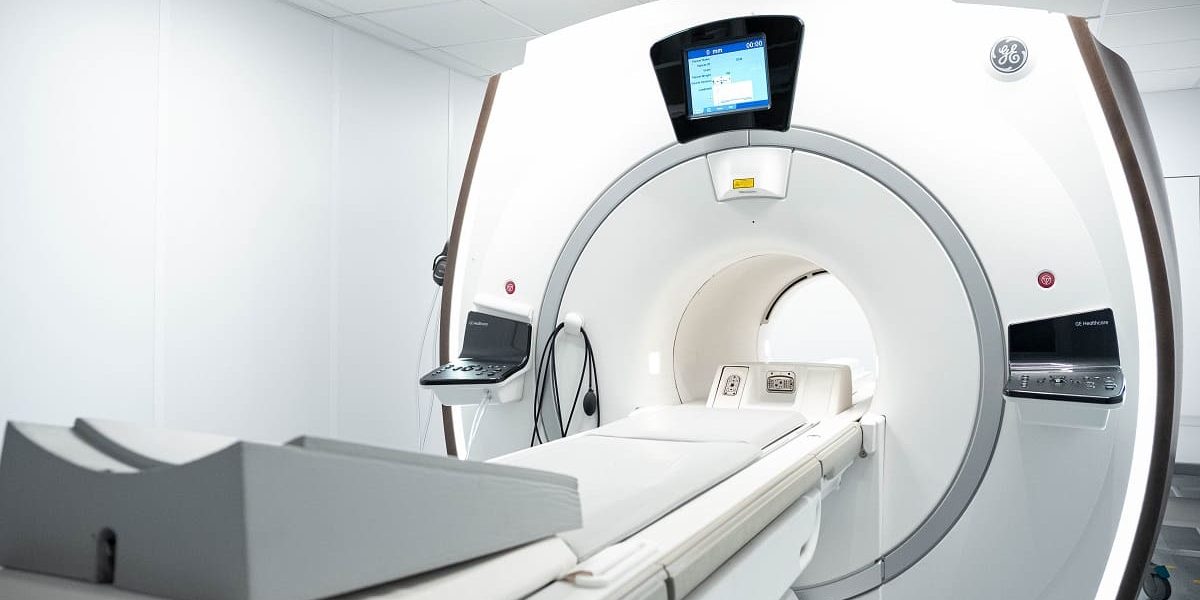
The examination at Luxmed Lublin Medical Center is performed on a GE MR 1.5T 450W GEM system with 32 channels, which provides very high image quality, shorter diagnostic times, and the ability to provide 3D imaging. This makes the abdominal MRI with contrast an extremely precise diagnostic tool that supports physicians in making a diagnosis.
When is it worth performing an abdominal magnetic resonance imaging?
Your doctor may order an abdominal MRI with contrast if:
- suspected tumors of the liver, kidneys, pancreas, spleen,
- detection of cancer metastases,
- diagnosis of cysts and inflammatory changes,
- monitoring the effectiveness of cancer treatment,
- assessment of the abdominal vessels and biliary system,
- post-operative check-ups.
This is one of the most accurate imaging tests, allowing us to see elements of the abdominal cavity that are not accessible with ultrasound or X-ray.
What does an abdominal MRI examination in Lublin look like?
The examination lasts on average 30-40 minutes, and with preparation the entire stay in the laboratory is approximately 50-60 minutes.
The patient lies on their back in a comfortable position. After contrast administration, the doctor obtains a detailed image of the abdominal cavity and all internal organs. Acoustic Reduction technology reduces the noise level of the MRI, and the wide opening (70 cm) reduces the feeling of claustrophobia. The examination is painless and safe.
Preparation for abdominal MRI with contrast
Abdominal MRI with contrast requires several preparation steps to be safe and precise:
✓ Perform a blood creatinine test, no older than 7 days before the test.
✓ Fast for 5 hours before the test – you can drink still water.
✓ 15-30 minutes before the examination, take 1-2 No-spa tablets with still water.
General tips:
✓ Bring previous test results (X-ray, ultrasound, MRI) regarding the organ being examined.
✓ Wear clothes without metal elements (e.g. no buttons, belt).
✓ Please report to the facility 30 minutes before your test with your ID.
Contraindications to abdominal MRI with contrast
Absolute contraindications to performing the test:
- weight over 226 kg,
- pacemaker/pacemaker,
- neurostimulators,
- pregnancy (inform the laboratory staff) – examination without contrast is possible only after assessing the diagnostic risks and benefits after the first trimester.
- invasive surgical, aesthetic or diagnostic procedures within the last 6 weeks (you must wait at least 6 weeks after the procedure, regardless of the body part being examined).
- metal foreign bodies in the eyeball (if in doubt, an X-ray of the eye sockets is performed).
- insulin pump or other drug delivery device, neurostimulator or other biostimulants,
- hearing implant, internal hearing aid or ossicular plastic surgery cochlear implant (if it contains ferromagnetic metals).
Relative contraindications:
- claustrophobia (fear of small, tight spaces),
- the presence of ferromagnetic metals in the body,
- Orthodontic appliances and other metallic foreign bodies in the body – the possibility of performing the examination should be discussed with the laboratory! In most cases, they are not a contraindication to the examination. Metallic foreign bodies may cause local artifacts, partially hindering the assessment of adjacent structures, or (rarely) cause heating of adjacent tissues – the examination may then be interrupted. In such cases, there is no threat to the patient's life or health.
- in the case of vascular clips, an MRI examination can be performed 6 weeks after clip implantation,
- In the case of a tattoo or permanent makeup, you must wait 6 weeks after it has been done.
Contraindications to the administration of a paramagnetic contrast agent:
- severe renal failure (if eGFR < 30 – examination possible for life-saving indications),
- pregnancy (the risks and possible diagnostic benefits should be considered),
- allergy (extremely rare cases).
Attention:
- dialysis patients – there is no need to postpone the dialysis date,
- breastfeeding period – a break in breastfeeding is not necessary in the case of tests without contrast.
Contraindications to performing the test
In the MRI lab, patient safety is a priority, so before you book your appointment, check if you have any contraindications, which are divided into absolute and relative.
Absolute contraindications to magnetic resonance imaging of the head:
- patient weight exceeding 226 kg,
- pacemaker, pacemakers or neurostimulators,
- pregnancy (inform the laboratory staff) – examination without contrast is possible only after assessing the diagnostic risks and benefits after the first trimester,
- invasive surgical, aesthetic or diagnostic procedures within the last 6 weeks (you must wait at least 6 weeks after the procedure, regardless of the body part being examined),
- metal foreign bodies in the eyeball (if in doubt, an X-ray of the eye sockets is performed),
- insulin pump, hearing implant, internal hearing aid, ossicular plastic surgery or cochlear implant containing ferromagnetic metals.
Relative contraindications to MRI of the head:
- the presence of ferromagnetic metals, orthodontic appliances or other metal elements in the body – examination is often possible, but may cause artifacts or local heating of tissues,
- vascular clips – MRI can be performed 6 weeks after the procedure,
- tattoos or permanent makeup – waiting 6 weeks after the procedure.
Contraindications to contrast agent administration:
- severe renal failure (eGFR < 30) – testing possible only in life situations,
- pregnancy – necessary assessment of diagnostic risks and benefits,
- allergy to contrast agent – very rare cases.
Additional notes:
- dialysis patients do not have to change the date of dialysis,
- Breastfeeding: for non-contrast examinations, it is not necessary to interrupt breastfeeding.
FAQ
How long does an abdominal MRI take?
An abdominal MRI with contrast takes an average of 30-40 minutes. This is the time of the examination itself, during which images of internal organs are obtained in various sequences. The entire stay in the laboratory—including preparation, medical history, and contrast agent administration—takes approximately 50-60 minutes. It's worth arriving a little early to complete the formalities. Thanks to the modern GE MR 1.5T 450W GEM scanner with 32 channels, scanning time is shorter and the patient is provided with greater comfort.
Abdominal MRI price
The price of an abdominal MRI in Lublin depends on whether the examination is performed with or without contrast. A private MRI doesn't require a referral, meaning it can be performed quickly, eliminating queues and unnecessary paperwork. Additionally, patients who pay online or at the e-Kiosk at 7 Orkana Street receive a 5% discount.
| Name of the study | Price |
|---|---|
| Magnetic resonance imaging of the abdominal cavity without contrast | 727 PLN |
| Magnetic resonance imaging of the abdominal cavity with contrast | 916 PLN |
| Magnetic resonance imaging of the abdominal cavity with contrast + MRCP | 1053 PLN |
What does an abdominal MRI with contrast detect?
Abdominal MRI is one of the most accurate imaging tests, allowing doctors to assess all the important components of internal organs. The addition of contrast enhances the image clarity and makes pathological changes more visible. This allows for the detection of:
- tumors and cysts of the liver, pancreas, kidneys or spleen,
- cancer metastases,
- inflammation and changes in the bile ducts,
- diseases of the abdominal vessels,
- condition after surgical procedures.
Unlike ultrasound or X-ray, MRI shows not only anatomical structures, but also the nature of changes, which facilitates accurate diagnosis.
When is abdominal MRI with contrast performed?
Your doctor may recommend an abdominal MRI with contrast when detailed diagnostics of internal organs are needed. This test is most often performed:
- when cancerous tumors are suspected,
- in the assessment of metastases and extensive lesions,
- in the diagnosis of cysts and inflammatory changes,
- in monitoring the effectiveness of oncological treatment,
- in follow-up after abdominal surgery.
Contrast allows the doctor to more precisely diagnose lesions and assess their vascularity. This is crucial in situations where other imaging tests, such as ultrasound, provide inconclusive results.
Is abdominal MRI better than ultrasound?
Abdominal ultrasound is the first diagnostic test performed. However, abdominal MRI provides a much more detailed image of organs and allows for the visualization of elements invisible on ultrasound – such as small tumors, vascular changes, or the internal structure of organs. MRI is particularly recommended when the doctor requires a comprehensive and detailed diagnosis. In practice, these tests complement each other – ultrasound is often the first step, while abdominal MRI with contrast is the next step in obtaining a confident diagnosis.
Do I need a referral?
You don't need a referral for an abdominal MRI at CM Luxmed Lublin if you're having the test done privately. You can schedule an appointment immediately and get the results quickly. This is a good solution for those who want to avoid long waits and queues. For tests covered by the National Health Fund (NFZ), a referral from a doctor is required. Therefore, it's worth asking your doctor which option is best for your situation.
Can I have an abdominal MRI if I have claustrophobia?
Yes – in our MRI lab in Lublin, we use a wide-bore (70 cm) MRI scanner with a short tunnel, which significantly reduces the feeling of being confined. Additionally, Acoustic Reduction makes the machine quieter than standard machines and the examination shorter. This is especially important for people who experience a fear of confined spaces. If you are severely claustrophobic, please inform the staff before your examination – the technician can recommend a personalized approach, and in exceptional cases, sedatives may be used.