Private examination
Referral : not required
Result description : up to 10 working days
Examination date : available dates
Discount : 5% when paying online or at the e-kiosk (Orkana 7)
Book your appointment with a 5% discount
National Health Fund (NFZ) examination
Referral: required
Result description: up to 15 working days
Examination date: subject to availability
Check the NFZ dates
Why is it worth doing with us?
The examination is
up to 2x shorter
up to 2x shorter
3D image – better diagnostics
Less claustrophobia – more comfort
A safe test also for overweight people
Description of the knee joint resonance imaging study
MRI of the knee is a non-invasive and safe examination that allows for an accurate assessment of:
- bone structures,
- joint cartilage,
- meniscus,
- cruciate and collateral ligaments,
- synovial membrane and soft tissues surrounding the joint.
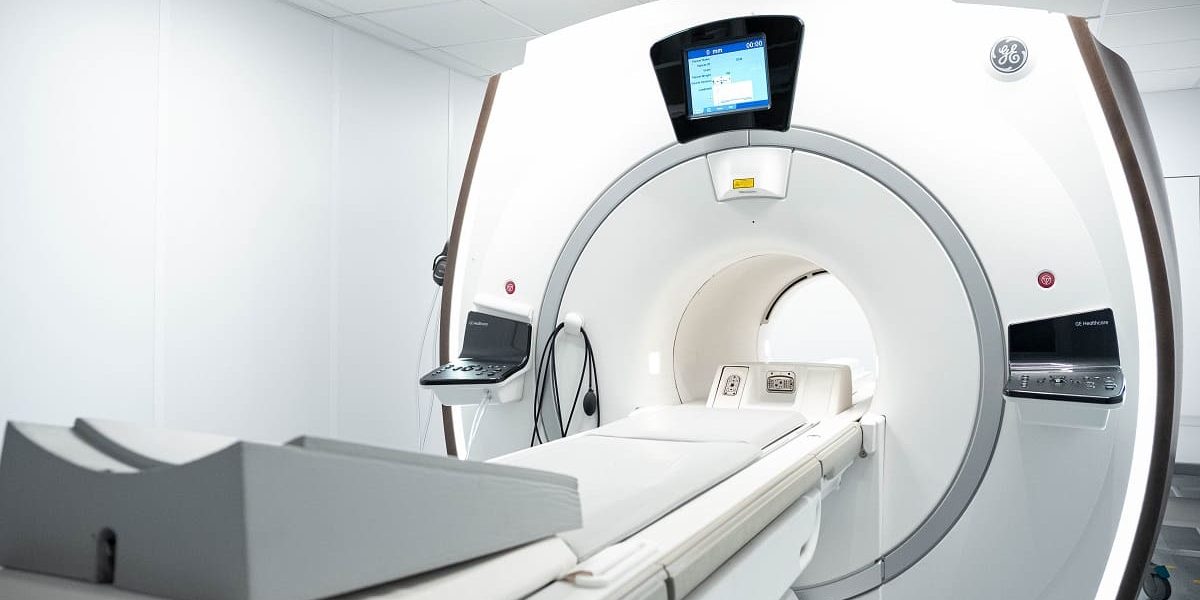
At CM Luxmed Lublin, we perform examinations using the GE MR 1.5T 450W GEM device with 32 channels , which ensures precise 3D imaging, shorter diagnostic time and greater examination comfort.
When should you have a knee MRI?
Most common indications:
- knee injuries (sprains, ligament tears, meniscus damage),
- chronic pain and swelling of the joint,
- restriction of mobility,
- suspicion of degenerative or inflammatory changes,
- follow-up after orthopedic procedures.
What does the examination look like?
The examination is painless. The patient lies still, and the knee is placed in a special coil.
Acoustic Reduction technology makes the device quieter, and the wide 70 cm opening reduces the feeling of claustrophobia.
The average examination time is 20–30 minutes (the entire time in the laboratory is approximately 40–50 minutes).
Preparation for MRI of the knee joint without contrast
- The examination does not require any special preparation.
To ensure the resonance is carried out efficiently and comfortably, you should:
- Bring with you the results of any previous tests of the organ being examined (e.g. X-ray, ultrasound, MRI).
- If the examined person takes medications on a regular basis, they should take them normally on the day of the examination
- For the examination, please wear loose (comfortable) clothing, free of metal elements (such as buttons or belts). Before entering the studio, please remove and leave any metal objects, phone, and jewelry in the changing room.
- Please report to the Luxmed Rezonans Lublin 30 minutes before the scheduled examination time with your ID document.
MRI of the knee joint with contrast
In some cases, your doctor may recommend a contrast-enhanced test to better assess inflammatory, neoplastic, or postoperative changes. In such cases:
Perform a creatinine test (no older than 7 days).
Fast for at least 5 hours before the test (still water is acceptable).
– Information regarding: implanted pacemaker, insulin pump, previous surgeries, including bypass surgery, stents, metal clips, shrapnel, bullets, metal implants, and claustrophobia is required, which constitute absolute or relative contraindications. If the patient has metal implants, it is necessary to determine the type of material or the manufacturer's name of the metal implant. It is essential to bring medical documentation containing information about the type/name of the metal implant
Contraindications to performing tests
Absolute contraindications to performing the test:
- weight over 226 kg,
- pacemaker/pacemaker,
- neurostimulators,
- pregnancy (inform the laboratory staff) – examination without contrast is possible only after assessing the diagnostic risks and benefits after the first trimester,
- invasive surgical, aesthetic or diagnostic procedures within the last 6 weeks (you must wait at least 6 weeks after the procedure, regardless of the body part being examined),
- metal foreign bodies in the eyeball (if in doubt, an X-ray of the eye sockets is performed),
- insulin pump or other drug delivery device, neurostimulator or other biostimulants,
- hearing implant, internal hearing aid or ossicular plastic surgery cochlear implant (if it contains ferromagnetic metals).
Relative contraindications:
- the presence of ferromagnetic metals in the body,
- Orthodontic appliances and other metallic foreign bodies in the body—the possibility of performing the examination should be discussed with the laboratory! In most cases, they are not a contraindication to the examination. Metallic foreign bodies may cause local artifacts, partially hindering the assessment of adjacent structures, or (rarely) cause heating of adjacent tissues—the examination may then be interrupted. In such cases, there is no threat to the patient's life or health.
- in the case of vascular clips, an MRI examination can be performed 6 weeks after clip implantation,
- In the case of a tattoo or permanent makeup, you must wait 6 weeks after it has been done.
Contraindications to the administration of a paramagnetic contrast agent :
- severe renal failure (if eGFR < 30 – examination possible for life-saving indications),
- pregnancy (the risks and possible diagnostic benefits should be considered),
- allergy (extremely rare cases).
Attention:
- dialysis patients – there is no need to postpone the dialysis date,
- breastfeeding period – a break in breastfeeding is not necessary in the case of tests without contrast.
FAQ
How long does an MRI of the knee take?
A modern 32-channel scanner shortens diagnostic time, and the wide opening (70 cm) increases comfort by reducing the feeling of claustrophobia. An MRI scan of a single knee at Luxmed Lublin Medical Center lasts an average of 20–30 minutes, and the entire stay in the lab, including preparation, lasts approximately 40–50 minutes.
What is the price of a knee MRI?
| Name of the study | Price |
|---|---|
| Magnetic resonance imaging of one knee joint without contrast | 632 PLN |
| Magnetic resonance imaging of one knee joint with contrast | 822 PLN |
What does an MRI of the knee detect?
Knee MRI is one of the most accurate imaging tests, allowing for the visualization of both the bony structures and the soft tissue components of the joint. High-resolution imaging allows for a detailed assessment of the cruciate and collateral ligaments, menisci, joint cartilage, synovium, as well as the muscles and tissues surrounding the knee. The test can detect conditions such as post-traumatic damage, degenerative changes, inflammatory processes, and neoplastic lesions. In many cases, knee MRI complements ultrasound or X-ray examinations when these methods do not provide sufficiently precise images. The final decision on whether to perform MRI or another imaging test is made by the doctor based on the patient's symptoms and previous results.
When is a knee MRI with contrast performed?
Knee MRI with contrast is recommended in situations where standard non-contrast examinations do not provide a complete picture of lesions. This applies to suspected tumors, metastases, extensive inflammatory processes, or post-operative complications. The contrast agent allows the physician to better assess the degree of vascularity of lesions, disease activity, and tumor boundaries. This makes knee MRI more precise and provides information that cannot be detected by ultrasound or conventional X-ray. The decision to use contrast is always made by the treating physician, taking into account the patient's health, previous test results, and clinical indications.
Does the knee MRI include the hip or the entire leg?
Knee MRI focuses solely on a single joint and assesses its components—bone, cartilage, ligaments, meniscus, and surrounding tissues. The examination does not include the hip or the entire lower limb, as this would require a different patient positioning and additional imaging sequences. If a larger area needs to be assessed, such as the thigh, hip, or entire leg, the doctor may order an MRI of a different section or an extended examination that covers multiple structures simultaneously. In some cases, hip ultrasound or X-rays may be complementary tests, but MRI provides the most detailed image of the multiple joint components. Ultimately, the doctor decides which diagnostic scope is best for a given situation.
Do I need a referral for an MRI?
Private tests – without a referral.
National Health Fund tests – referral required.