Dental physiotherapy most often focuses on temporomandibular joint disorders, which occur in 3-12% of the population, causing various types of pain or functional disorders in the masticatory system.
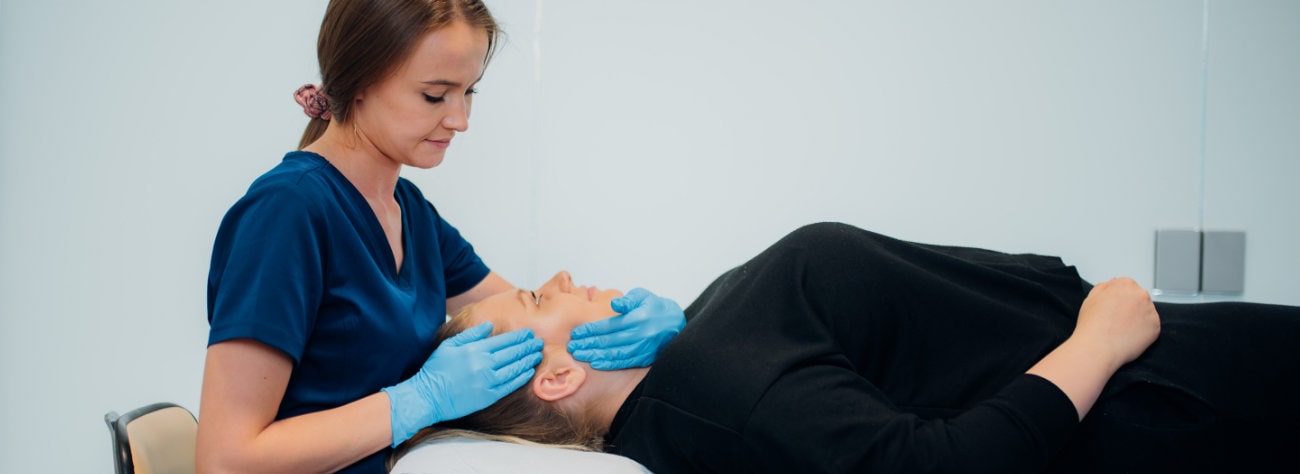
Therapy involves manual techniques aimed at reducing pain. Therapy also aims to improve range of motion and the quality of movement. A physiotherapist uses manual therapy techniques, such as:
- joint techniques: joint slides, joint traction,
- muscle techniques: trigger points, transverse and functional massage of muscles, e.g. masseter, temporal, medial pterygoid, infrahyoid, suprahyoid.
The therapy may be supplemented by: high-energy laser therapy treatments and exercises recommended by a physiotherapist.
Indications
- pain, stiffness in the temporomandibular joints, masticatory muscles, face,
- asymmetric movement of the jaw when opening the mouth (e.g. deviation of the jaw to one side during movement),
- reduced range of motion in the temporomandibular joints – feeling of being locked, lockjaw,
- cracking, clicking, popping sensation when moving the jaw,
- tension headaches, sinus headaches, migraine headaches, neuropathic headaches,
- supporting speech therapy treatment,
- cervical spine pain,
- bruxism,
- discomfort associated with eye movement,
- tinnitus,
- patients after surgical tooth extraction,
- supporting the treatment of musculoskeletal dysfunctions outside the head and cervical spine.
Contraindications
- viral and bacterial diseases,
- painful sensitive language,
- white and red mucous membrane inside the mouth,
- sore throat lasting longer than 3 weeks,
- hoarseness lasting more than 3 weeks,
- painful, difficult swallowing,
- nosebleed,
- non-healing lesions in the masticatory system.
No referral is required for the procedure.
Place of production: Lublin, 6a Zwycięska Street