
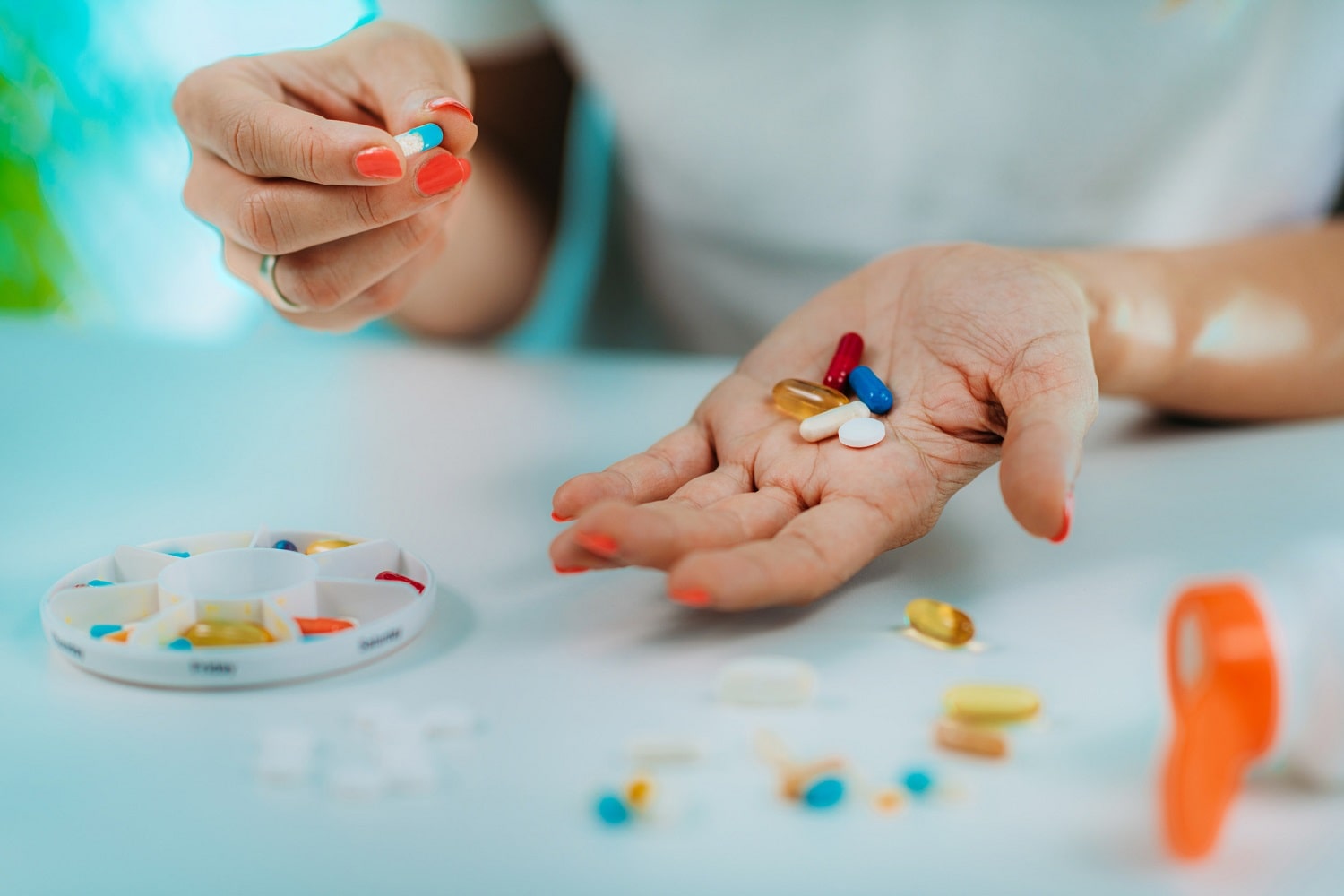
Will a Pill Cure Everything? A Doctor on Polish Drug Mania
According to the National Institute of Medicines, Poland is among the top countries in terms of drug and dietary supplement consumption. Furthermore, demand for medications is steadily growing. We overuse prescription and over-the-counter medications. We increasingly attempt to treat our illnesses on our own, succumbing to advertising. We rarely recognize excessive drug use ourselves, justifying it with its medicinal properties.
We talk about medications, dietary supplements, and their abuse with Anna Płaczkiewicz, MD, a specialist in family medicine and internist.
Why are we so eager to take pills?
Very often, we seek a quick solution to a problem. It's easier for us to take medication or swallow a pill than, for example, to change our lifestyle or eating habits . We also want rapid results in treating illnesses. The increasing demand for medications and supplements can also be attributed to an aging population. Unfortunately, easy access to medications (over-the-counter availability, availability at various retail outlets, and online advice) exacerbates undesirable effects. Patients see different specialists and are prescribed the same medications. Therefore, they take, for example, two or three doses of medication instead of one. Furthermore, they often combine nonsteroidal anti-inflammatory drugs (NSAIDs), such as aspirin, ibuprofen, and paracetamol, thus exceeding the maximum safe doses. A tendency toward addiction may also be a factor in drug addiction.
Which drugs are most often abused?
The most addictive drugs are those used to treat pain, especially opioids. By this, I mean medications containing morphine and those containing codeine. Drugs acting on the central nervous system, such as those used to treat anxiety disorders, depression, or sleep disorders, can also be addictive. Overuse of these medications (primarily benzodiazepines) can cause loss of consciousness and even death. These medications are often highly addictive and, for many patients, act as happy pills. Medications containing amphetamines are safe when taken properly and under medical supervision. Abuse leads to addiction.
Can we become addicted to commonly available medications, the kind we can buy at a pharmacy or supermarket? We often take them for quick relief…
Unfortunately, yes. An example is, in addition to the readily available nonsteroidal anti-inflammatory drugs mentioned above, cough medications. They often contain codeine and dextromethorphan. Nasal decongestants may contain pseudoephedrine, which in large doses can alter consciousness. Runny nose drops containing oxymetazoline or xylometazoline can also be addictive. The common misconception is that herbs are safe. However, herbal laxatives can also be addictive, and at some point, the patient is unable to have a bowel movement without the laxative mixture.
Can over-the-counter medications be harmful? What about dietary supplements?
Yes, medications can and often do harm. They are often taken without specialist supervision. They can interact with other medications taken as directed by a doctor, often on a regular basis. Most patients fail to read the package inserts for over-the-counter medications. And taking medications incorrectly, including supplements, can be hazardous to your health. For example, nonsteroidal anti-inflammatory drugs can damage the gastrointestinal tract, contributing to gastritis and duodenitis, or the development of stomach ulcers. Some studies indicate their negative impact on the cardiovascular system, increasing the risk of heart attack and stroke.
Supplements can also be harmful if taken in excess or without consulting a doctor. Some vitamins and minerals in high doses can cause toxicity ; for example, too much vitamin A can damage the liver. Inappropriate supplementation can disrupt the body's nutrient balance, leading to deficiencies in other nutrients; for example, too much calcium can limit magnesium absorption. Low-quality supplements or those purchased from unreliable sources may contain contaminants, heavy metals, or prohibited substances, which pose a health risk. Interactions between supplements and medications can weaken or enhance their effects; for example, vitamin K can reduce the effectiveness of anticoagulants.
How does our body become addicted?
It's an interaction between the body and a chemical. The mechanism of addiction itself seems simple – the sensations experienced after taking a given drug encourage the user to take it again. If I feel better after taking a given drug, I can continue using it. This is the so-called principle of behavioral reinforcement. A drug (when abused) causes changes in physiological and psychological functions. First, psychological dependence on the substance develops, then physical dependence. Lack of the substance at this stage causes dysfunction in the body. The so-called withdrawal syndrome is an important sign of drug addiction. A person deprived of the drug feels irritable or lethargic. They may complain of dizziness, nausea, sleep problems, and appetite problems.
Can drug addiction be treated and how?
There's no single magic bullet. The most important thing is knowledge about the medications you're taking and taking them responsibly, appropriately for your condition. If addiction develops, one approach is to gradually reduce the dose and eventually discontinue the medication. All this, of course, under a doctor's supervision. In the case of opioid addiction, substitution therapy and psychotherapy are often necessary. Addictions to medications that don't affect the brain are the easiest to treat. During treatment, if you feel like the medication's effects have diminished, it's worth addressing.
All medications, when taken as prescribed by a doctor, can improve the quality of life for people suffering from various ailments. Short-term use under the supervision of a specialist, even the most addictive medications, rarely leads to addiction. Only overuse can lead to serious consequences.
Thank you for the interview