

Why Can't I Lose Weight? Obesity Isn't a Cosmetic Problem
The World Health Organization (WHO) warns that in just 30 years (1980-2008), the percentage of obese people worldwide has doubled. Poland is also experiencing a veritable obesity epidemic. Over 50% of adults in our country are overweight, and approximately 20% of Poles (some estimates suggest as high as 25%) are obese! Experts predict that if we don't radically change our lifestyles, by 2035, not one in five people in Poland will be obese, but one in three.
Causes of excess body weight
It's not enough to say, "You're eating too much. Eat less and move more, and the problem will solve itself." The causes of obesity are many and complex. However, a positive energy balance leads to fat accumulation, which is the result of an imbalance between the amount of energy supplied to the body and the amount we can burn. This is related to access to highly processed foods high in simple sugars and fat, irregular or skipped meals, and snacking on high-calorie snacks. also contribute to this , including a sedentary lifestyle, insufficient physical activity, rushing and chronic stress, chronic illnesses and the side effects of certain medications, and disturbances in the hunger and satiety control centers resulting from overeating. Food is closely linked to our psyche and emotions, and can act as a comfort or a reward.
What is obesity?
It's important to clearly emphasize that obesity is a disease. It's classified as E-66 in the International Classification of Diseases. It's defined as excessive accumulation of body fat, exceeding 30% in women and 20% in men. To assess the percentage of body fat, a professional body composition test (body composition analysis) is necessary.
A simpler way is to calculate the BMI (Body Mass Index) and interpret it based on the WHO classification presented in the table.
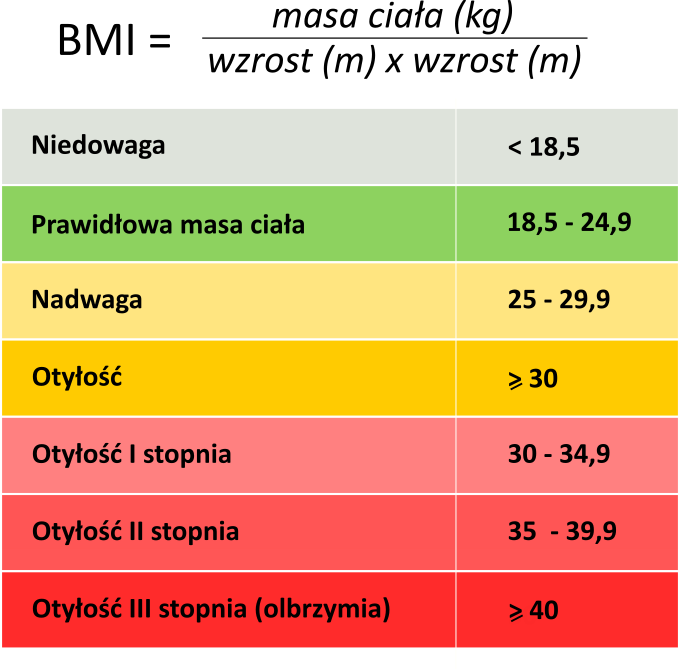
You can also measure your waist circumference at the navel. Weight loss is especially recommended if it is ≥ 88 cm for women and ≥ 102 cm for men. Ideally, however, the waist circumference should not exceed 80 cm for women and 94 cm for men.
Why is obesity dangerous?
Obesity is a disease that poses a threat to health and life. It significantly increases the risk of type 2 diabetes, hypertension, dyslipidemia, gallbladder disease, and insulin resistance. Obese individuals are more likely to experience coronary heart disease, heart attack, stroke, sleep apnea, shortness of breath, osteoarthritis, gout, polycystic ovary syndrome, hormonal imbalances, fertility problems, and certain types of cancer (e.g., colon, breast, ovarian, prostate, liver, and biliary tract cancer). Obesity is also often accompanied by insomnia and depression, related to factors such as low self-esteem and lack of acceptance by others. Therefore, it's WORTH losing weight, primarily FOR YOUR HEALTH.
How to start treating obesity?
The first step may be a visit to your family doctor, who will order basic blood tests and assess your obesity level. A crucial element of treatment will be lifestyle modifications, including dietary changes combined with appropriate physical activity. At this stage, the support of an experienced dietitian, as they will plan a treatment strategy. It's important to remember that there are no "miracle diets." The dietitian's role is to help you permanently change your eating habits in a safe and healthy way.
Sometimes, combined with diet therapy, pharmacological treatment or, in very advanced cases, surgical treatment for obesity (CHLO) may be necessary. If a doctor diagnoses obesity, treatment may be reimbursed by the National Health Fund.
Natalia Parulska, M.A.
Clinical Dietitian
Frequently asked questions – FAQ
Why can't I lose weight?
Difficulties with weight loss may result from many causes, including an incorrect diet, insufficient activity, hormonal disorders, insulin resistance, chronic stress, sleep deprivation, or medications.
Is obesity a disease?
Yes. Obesity is a chronic disease that requires diagnosis, treatment, and long-term support. It is not merely an aesthetic problem or the result of a lack of willpower.
What can make losing weight difficult?
Weight loss can be hindered by irregular meals, excessively large portions, snacking, sweetened drinks, insufficient exercise, sleep disorders, stress, thyroid disease, insulin resistance, and certain medications.
What tests should be performed if you have weight problems?
Your doctor may recommend a complete blood count, glucose, insulin, lipid profile, TSH, FT4, liver function tests, creatinine, uric acid, vitamin D, and other tests depending on your symptoms and health condition.
Does insulin resistance make it harder to lose weight?
Insulin resistance can contribute to weight gain and make weight loss difficult. It requires a carefully selected diet, physical activity, monitoring of results, and in some cases, treatment.
Is diet alone enough to treat obesity?
Diet is an important element of treatment, but a broader approach is often needed: physical activity, working on habits, sleep, stress reduction, diagnosis of comorbidities and support from specialists.
Who can help treat obesity?
A doctor, dietitian, physiotherapist, psychologist or other specialists can help in treating obesity, depending on the causes of the problem, comorbidities and the patient's needs.
When should you see a doctor if you are overweight or obese?
It is worth seeing a doctor if your weight increases despite attempts to change your lifestyle, you experience concomitant illnesses, chronic fatigue, menstrual disorders, drowsiness, shortness of breath, or joint pain.