
A dermatologist's guide
Asymmetric skin lesions in children – Lichen striatus and APEC
Dear parents!
In this article, I would like to present to you two "ASYMMETRICAL CONDITIONS" that suddenly appear on the skin of your children and that often cause you concern, prompting you to visit a pediatric dermatologist.
These include lichen striatus and APEC. They resemble a rash, erythema, and papular petechiae that appear suddenly and persist for a long time on a child's skin. In this article, I will try to explain these rare, yet frightening, ailments.
Red welts in children
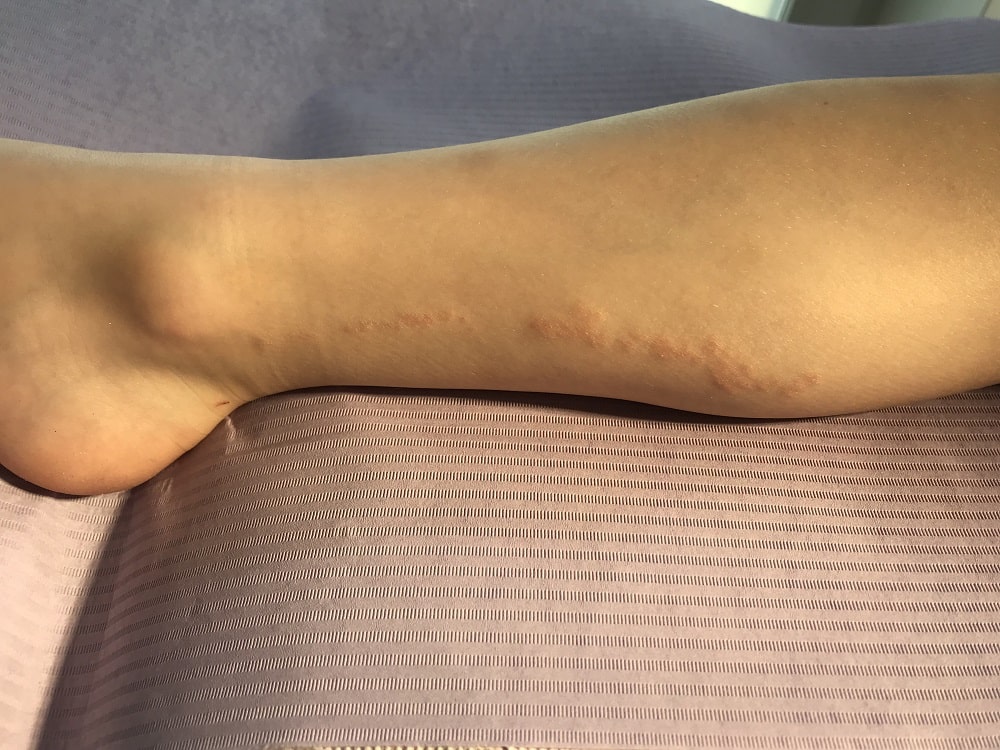
striatus is a rare skin condition of unknown etiology that affects children. Clinically, it presents as clustered, gently scaling papules that snake along the lines of Blaschko. These lines of cell growth in the skin are not normally visible. They become visible when certain skin conditions manifest in these "V"- and "S"-shaped patterns. Lesions are usually located on the extremities.
Lichen striatus is a self-limiting condition, resolving spontaneously within 1-2 years.
Rash on one side of the body
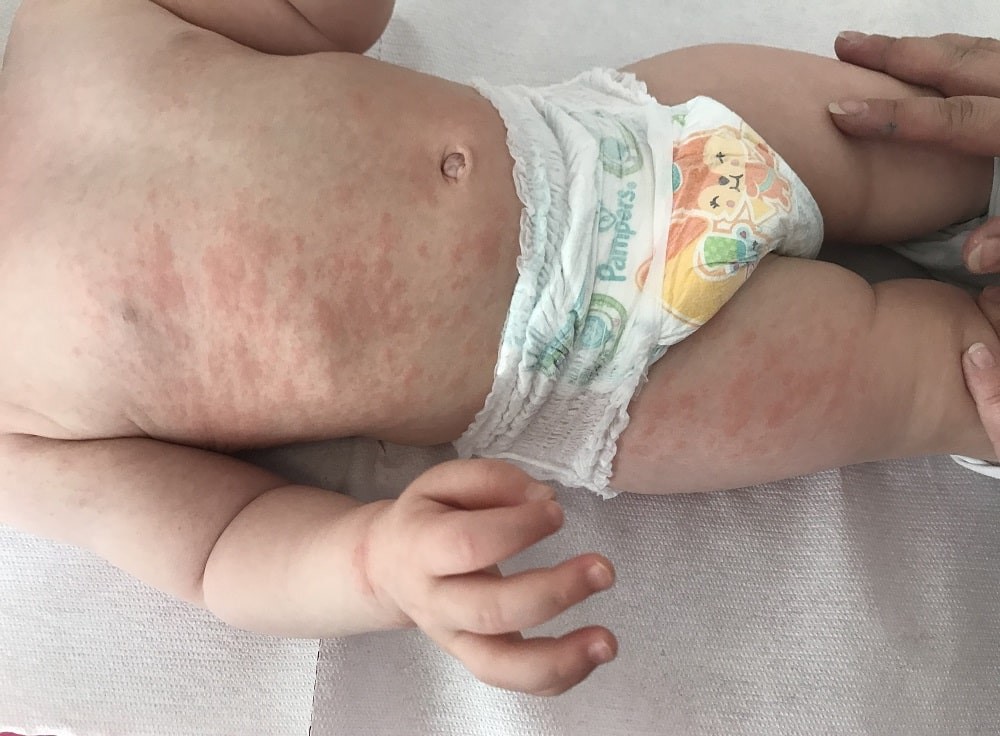
APEC (asymmetric periflexual exanthem of childhood) is an asymmetric, unilateral childhood rash affecting the flexural areas on the lateral side of the chest. It is a self-limiting, maculopapular, erythematous rash that is often preceded by mild upper respiratory tract infections or diarrhea. Fever accompanies the disease in 40% of cases. Skin lesions appear on one side of the body, on the trunk and near larger flexural areas, i.e., the axilla and groin, and then spread exfoliatively to adjacent parts of the trunk and upper and lower extremities. After 2-4 weeks, the rash also appears on the other side of the body, but remains distinct only on one side.
The rash lasts a long time, sometimes up to 6-8 weeks. Onset is most common in late winter or early spring. It primarily affects children aged 2 to 3 years, but cases can also occur in children as young as 8 months or 10 years old. Treatment is unnecessary, and sometimes it is symptomatic for the itching.
Both conditions don't actually require treatment; patience is all that's needed. However, they are sometimes confused with allergic contact dermatitis or shingles, so they should always be consulted with a pediatric dermatologist.