
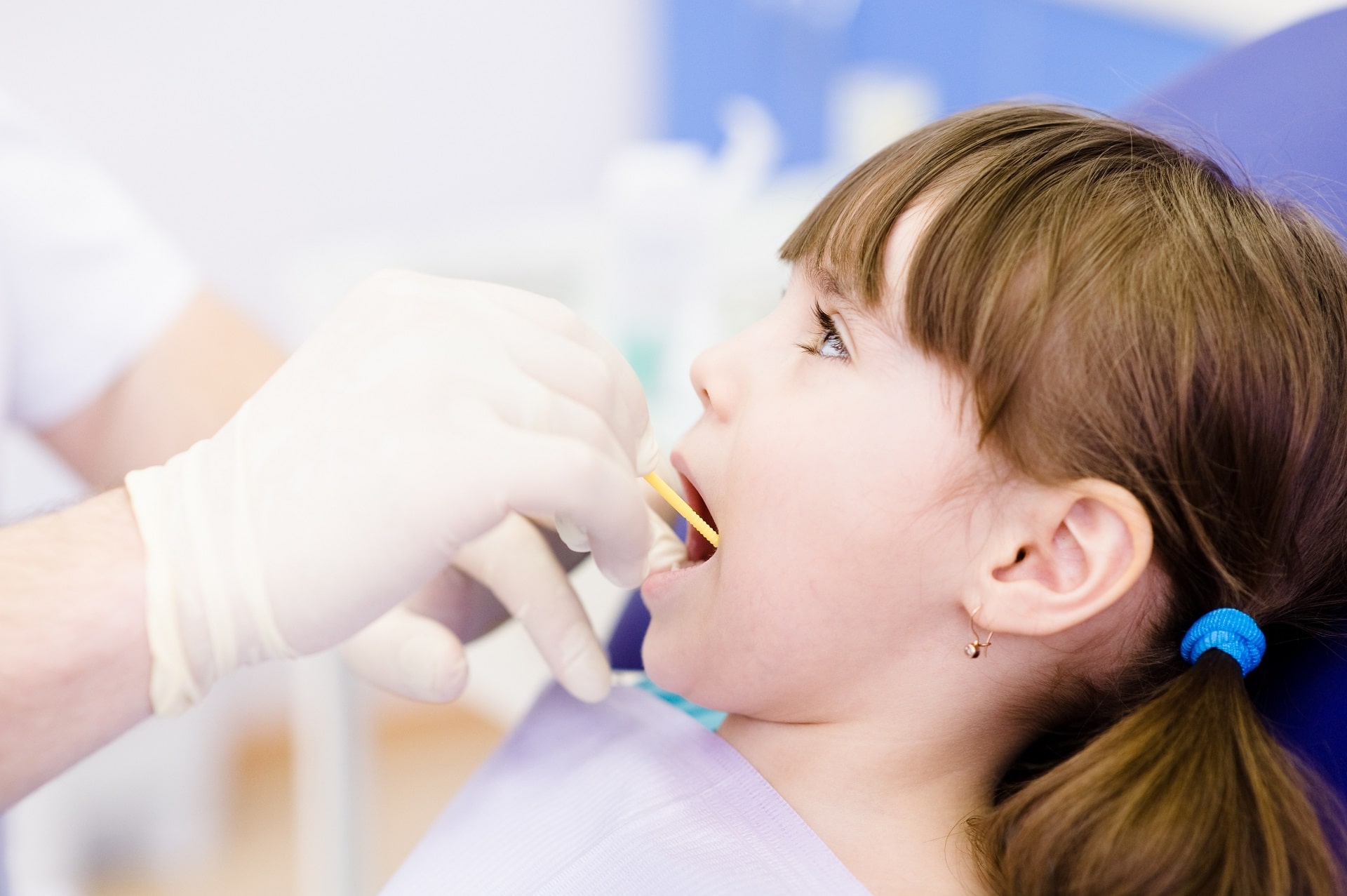
Caries of primary teeth.
How to prevent tooth decay in children?
Childhood tooth decay is a serious problem that is often ignored by parents. It is characterized by a rapid, rapid progression of the disease process. It is an infectious disease that involves the demineralization of tooth enamel, leading to the formation of a cavity. It can appear even immediately after the first primary teeth appear!
Can baby teeth be treated?
Tooth decay is a disease! The circulating myth that baby teeth "don't hurt" and aren't worth treating because they'll "fall out anyway" often leads to parents bringing their child to the dentist for their first visit in pain! Currently, baby tooth decay affects every other three-year-old and as many as 85% of six-year-olds!
What are the consequences of not treating baby teeth?
In cases of advanced caries, we strive to secure as many cavities as possible in the shortest possible time. It's important to realize that untreated caries in primary teeth can cause pain and premature tooth loss, among other things. This, in turn, can lead to malocclusion and the development of abnormal speech habits. Therefore, it may be necessary to refer the child for speech therapy.
Poor articulation can lead to difficulties with communication and peer acceptance. At worst, it can impact a child's personality development, reducing their self-esteem. At best, it can increase the risk of developing tooth decay in permanent teeth.
So what should be done to avoid such situations?
Take care of proper oral hygiene:
- From the first tooth to the age of 3, we brush our teeth with a fluoride toothpaste with 1000 ppm, the amount of which is the size of a grain of rice, at least twice a day.
- From 3 to 6 years of age – 1000 ppm fluoride toothpaste, a grain of rice on the toothbrush, at least twice a day.
- From 6 years of age, 1450 ppm toothpaste, at least twice a day.
Let us remember that it is the parents who brush the teeth and/or control the quality of brushing their children, even up to 8 years of age.
Take your child to an introductory visit . This is their first visit to the dentist, which should occur around the age of one. Its purpose is to familiarize the patient with the dental office. The doctor will provide preventive care recommendations, dietary recommendations, and toothbrushing instruction. The best and most affordable approach, as in other areas of medicine, is preventative care. Remember that dental checkups for your child should occur every six months, and even every two months if there's a high risk of tooth decay.
There are many methods of treating primary teeth, from the simplest fillings and fissure sealants to the sometimes inevitable extraction of a primary tooth. As a dentist, I hope that parents' awareness of pediatric dentistry will continue to grow. I treat both children and adults, but working with children has taught me great patience, and it's when I receive a drawing from little Staś that brings a smile to my face.
Dentist Magdalena Pawlas