Dental physiotherapy – what is it? When should it be used?
Dental physiotherapy is still a little-known field of medical rehabilitation. It's a shame, because it has so many applications. Some problems we don't even realize we're dealing with, we struggle with for years, and the solution can be so simple.
Dental physiotherapy can help if you're struggling with temporomandibular joint disorders, which affect up to 12% of the population, but also with other ailments unrelated to the chewing system.
We explain what dental physiotherapy is. Monika Wachowska, M.A., a physiotherapist who provides daily pain relief to her patients and improves the range and quality of movement, including in the craniocervical-mandibular system.
What is dental physiotherapy?
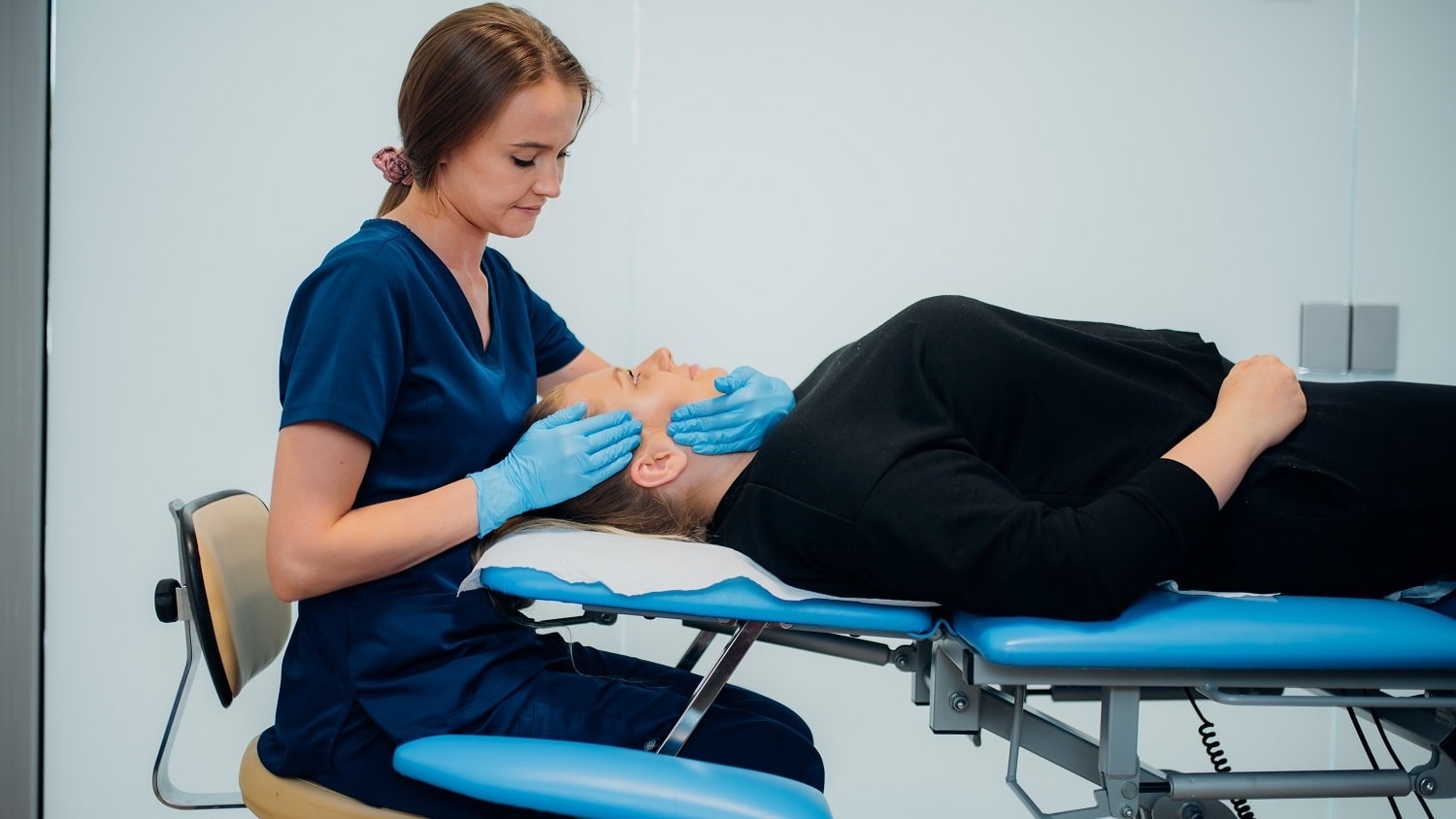
Dental physiotherapy is currently undergoing intensive development. It addresses the craniocervical-mandibular system. It is used to restore normal physiological mobility in the temporomandibular joints and focuses on normalizing tension within this system.
Patients come to me with problems related to chewing, swallowing, and breathing, among other things. Dental physiotherapy also works well as a complement to speech therapy (speech problems) and in situations where they have difficulty expressing emotions (nerve palsy).
What are the indications for this therapy?
– There are many indications for dental physiotherapy. You'll be surprised how helpful it can be:
- pain in the teeth, mouth, face and head,
- cracking and popping sounds in the temporomandibular joints,
- problems with opening and closing the mouth,
- problems with swallowing, chewing,
- clenching and grinding of teeth (bruxism),
- tinnitus, feeling of blocked ears,
- mechanical injuries,
- malocclusion, posture defects,
- tooth abrasion, enamel cracks, frequent exposure of tooth necks,
- degenerative changes in the masticatory system,
- a feeling of the eyeball popping out and frequent tearing,
- sensory disturbances in the facial area,
- rehabilitation before surgery in the area of the masticatory system (preparing the patient for the procedure by restoring proper mobility in the joints and normalizing tension, which will accelerate recovery),
- rehabilitation after surgery in the area of the masticatory system (restoring proper joint mobility and appropriate muscle tension in the masticatory system and facial skeleton),
- rehabilitation in endodontics (elimination of pain in the temporomandibular joints and muscle fatigue resulting from prolonged opening of the mouth, e.g. during long-term root canal treatment),
- rehabilitation in orthodontics (elimination or reduction of pain symptoms associated with orthodontic treatment).
Should patients do any special preparation for such a visit?
– If the patient has undergone surgery, they should always bring their treatment documentation with them. The rest of the preparation is the same as for a dental visit.
What is the visit like?
– First, of course, I conduct a thorough interview with the patient. Then I check the mobility of the temporomandibular joints, dentition, jaw mobility, and muscle tone.
What are the most common causes of such problems?
– There can be many reasons, but the most common ones are certainly:
- stress,
- malocclusion,
- injuries to the head, neck or facial skeleton,
- breathing disorders,
- problems with swallowing,
- long dental treatment,
- excessive chewing of gum.
Is dental physiotherapy a good solution for patients struggling with bruxism?
Yes, bruxism, or the clenching and grinding of teeth, is a problem that bothers me both day and night. Due to the very stressful lifestyles most of us lead, this is the problem I encounter most often. Unfortunately, untreated bruxism leads to persistent problems.
How does dental physiotherapy help?
– Depending on the problem, we can work on:
- muscles – using soft tissue techniques, e.g. trigger point therapy, fascial techniques or transverse massage, we are able to completely eliminate pain,
- temporomandibular joint – using techniques such as traction or joint mobilization, we are able to restore the correct range of motion and improve the structure of the cartilage,
- joint disc – muscle relaxation techniques, movement exercises and joint traction can be of great importance.
How long does therapy last?
– The duration of therapy is individually tailored to the patient's needs, as is its frequency. It all depends on the patient's presenting problem and the accompanying ailments.
Dental physiotherapy can sometimes help with ailments other than those related to the chewing system. Your spine problems may be caused by temporomandibular joint dysfunction. It's worth trying this method precisely because of its wide range of applications.