

Prolapse of the reproductive organ
Genital prolapse (Genital Descensus) is a change in the position of the uterus and vagina due to muscle stretching, but it's not limited to that! It also involves the lowering of the urinary tract, small intestine, and rectum, as well as sexual dysfunction. Not all of these changes always occur simultaneously; sometimes you may not even notice them or suspect other conditions. Therefore, it's worth learning more about it, seeking specialist advice, and getting help, as not every change of this type requires plastic surgery.
We asked Natalia Stopa-Harasiuk, M.A. , a urogynecological therapist accredited by the Polish Urogynecological Society, about the problem of pelvic organ prolapse
Causes of prolapse of the reproductive organ
Many factors contribute to impaired pelvic floor statics. The most common causes of these anatomical abnormalities include damage to the myofascial-neural structures within the pelvic floor. This damage can result from mechanical trauma, such as childbirth, but also from pelvic floor surgery. Aging can also cause pelvic floor prolapse, caused by hormone deficiencies (estrogens, androgens), which leads to impaired structure and function of proteins responsible for the mechanical strength of pelvic floor tissues.
You may simply be predisposed to pelvic organ prolapse. This can be facilitated by specific anatomy, congenital collagen synthesis disorders, and contributing factors such as chronic cough, obesity, and current or past heavy physical labor. According to available epidemiological data, 50% of multiparous women experience pelvic organ prolapse, yet only 10% require surgical intervention.
Symptoms of pelvic floor static disorders
One of the most bothersome symptoms of pelvic organ prolapse is discomfort during urination: frequent urination, urgency, feeling of incomplete emptying of the bladder, difficulty in starting urination.
Equally troublesome are defecation disorders: constipation, feeling of incomplete defecation, discomfort during defecation, feeling of urge to defecate.
Other symptoms reported by patients include: a feeling of heaviness, pain in the lower abdomen, perineum, or sacral spine, abdominal discomfort, and a palpable spherical foreign body in the vagina. These can also be consequences of pelvic organ prolapse, which you may not even associate with this problem.
What are the types of pelvic organ prolapse?
Depending on the degree of reduction, we distinguish:
I degree – the prolapsed part of the uterus or vagina does not exceed the vestibule of the vagina
II degree – the prolapsed part of the uterus or vagina reaches the vestibule of the vagina
III degree – the prolapsed part of the uterus exceeds the vestibule of the vagina and is visible externally (partial or complete prolapse of the reproductive organ)
Depending on the type of defect, we distinguish:
- urethrocele – damage to the ligamentous structures supporting the urethra
- cystocele – damage to the vesico-vaginal fascia
- enterocele – damage to the uterosacral ligaments
- rectocele – a lesion of the rectovaginal fascia
- in addition to the above, defects also include prolapse of the uterus and vagina
Reproductive organ dysfunction requires specialized diagnostics and an appropriate therapeutic approach. As health awareness and the desire to maintain a healthy quality of life are increasing, more and more women struggling with this problem are seeking specialist help. In this case, making a proper diagnosis requires understanding the exact cause of the dysfunction, so the examination and treatment should be performed by a specialist in urogynecological physiotherapy in Lublin.
This field is primarily concerned with restoring proper tension, particularly in the pelvic area. The entire process should be based on the premise that the female pelvis is composed of interconnected structures and that there is a close connection between its structure and function.
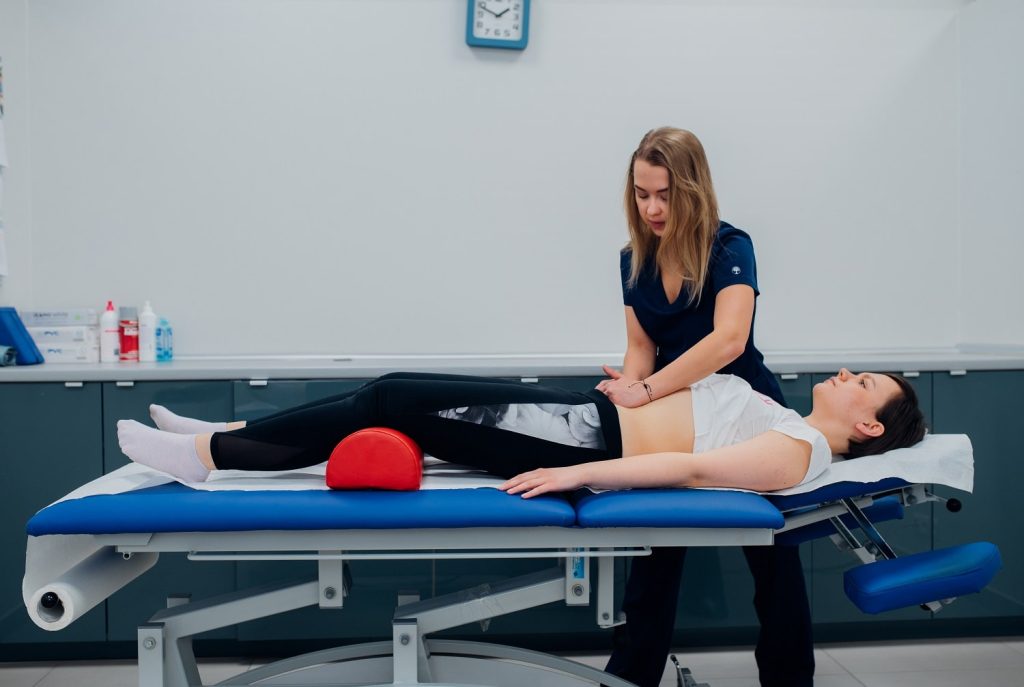
Prolapse of the reproductive organ – treatment
The most important step is to properly diagnose the type and severity of the disease. The patient's age is a secondary consideration. For first- and second-degree (IIa) uterine prolapses, conservative treatment is recommended, consisting of pessary therapy and therapy with a urogynecological physiotherapist. Pelvic floor exercises and education on how to change daily habits are key to treatment.
Local estrogen therapy is used in postmenopausal patients. If urinary urgency occurs, bladder conditioning and pelvic floor exercises are recommended.
When conservative treatment is not possible, depending on the severity of the pelvic organ, bladder, or rectum prolapse, appropriately selected surgical methods are used. Surgeries are performed via vaginal, laparoscopic, or abdominal approaches.
After surgery, it's recommended to seek postoperative physiotherapy consultation. The foundation of proper recovery is educating the patient on how to avoid engaging the abdominal wall, how to perform daily activities without straining the pelvic floor muscles, and how to learn how to activate these muscles.
Source:
- Interdisciplinary guidelines of the Polish Urogynecological Society regarding the diagnosis and treatment of pelvic organ prolapse; https://ptug.pl/
- Interdisciplinary guidelines of the Polish Urogynecological Society regarding physiotherapeutic treatment of functional disorders of the pelvic organs; https://ptug.pl/
- Etiology and risk factors of female reproductive organ prolapse and urinary incontinence Curr Gynecol Oncol 2019, 17(2), p. 69–77
- Risk factors for pelvic floor defects in women scheduled for reconstructive surgery – a Polish multicenter study; Ginekol. Pol. 2010, 81, 821-827
Frequently asked questions – FAQ
What is pelvic organ prolapse?
Genital prolapse, or descensus genitalis, is a change in the position of the uterus and vagina. It may also involve the descent of the urinary tract, small intestine, or rectum and may be associated with sexual dysfunction.
Does pelvic organ prolapse always cause symptoms?
Not always. Some changes may be difficult to notice or may resemble other conditions. Therefore, if you experience any disturbing symptoms, it's worth consulting a specialist.
What are the causes of pelvic organ prolapse?
The most common causes include damage to the myofascial-neural structures in the pelvic area. This can occur after childbirth, pelvic floor surgery, aging, and hormonal deficiencies, among other factors.
What contributes to the prolapse of the reproductive organs?
The risk of pelvic organ prolapse may be increased by anatomical predispositions, congenital collagen synthesis disorders, chronic cough, obesity and current or past heavy physical work.
What symptoms may indicate pelvic organ prolapse?
Symptoms may include a feeling of heaviness, pain in the lower abdomen, perineum or sacrum, abdominal discomfort, and the sensation or feeling of a spherical foreign body in the vagina.
What urinary problems can occur with pelvic organ prolapse?
Frequent urination, urinary urgency, a feeling of incomplete bladder emptying, and difficulty initiating urination may occur. These symptoms can be among the more distressing symptoms associated with pelvic floor dysfunction.
What intestinal problems can occur with pelvic organ prolapse?
Prolapse of the pelvic organs may be accompanied by defecation disorders such as constipation, a feeling of incomplete evacuation, discomfort during defecation and a feeling of urge to defecate.
What are the degrees of pelvic organ prolapse?
There are three degrees of descent. In degree I, the presenting portion of the descent does not extend beyond the vaginal vestibule. In degree II, the descent of the uterus or vagina reaches the vaginal vestibule. In degree III, the presenting portion extends beyond the vaginal vestibule and becomes visible externally.
What are the types of defects in uterine prolapse?
Types of defects include urethrocele, cystocele, enterocele, and rectocele. Descent may also affect the uterus and vagina.
Who should diagnose pelvic organ prolapse?
Disorders of reproductive organ statics require specialized diagnostics. Examination and treatment should be performed by a specialist in urogynecological physiotherapy, as a proper diagnosis requires determining the exact cause of the dysfunction.
Does pelvic organ prolapse always require surgery?
Not every lesion of this type requires surgery. For first- and second-degree pelvic floor reductions, conservative treatment is recommended, which may include pessary therapy and therapy with a urogynecological physiotherapist.
What is conservative treatment for pelvic organ prolapse?
Conservative treatment may include pessary therapy, therapy with a urogynecological physiotherapist, pelvic floor exercises, and education on changing daily habits.
When is surgical treatment used?
Surgical treatment is used when conservative treatment is not possible. The surgical method is selected based on the severity of the prolapse of the reproductive organs, bladder, or rectum, and the procedure can be performed vaginally, laparoscopically, or abdominally.
Is it worth using urogynecological physiotherapy after surgery?
Yes. After surgery, it's recommended to consult a physiotherapist. Postoperative education includes learning how to perform daily activities without excessive strain on the pelvic floor muscles and without engaging the abdominal muscles.