
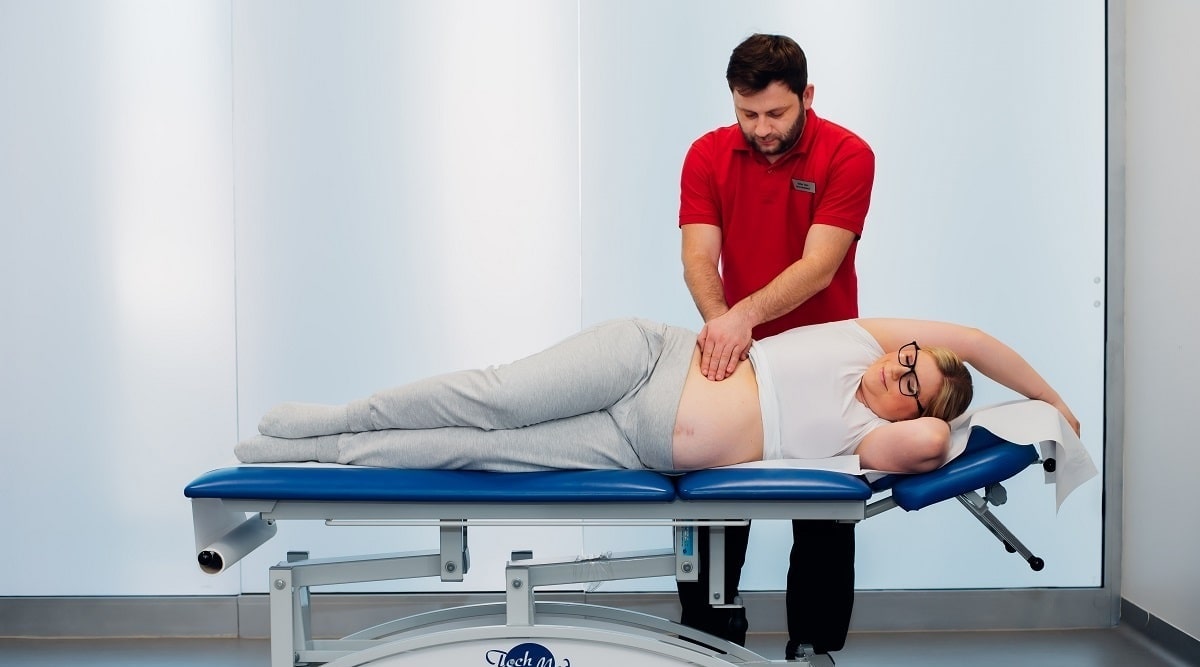
Preparing for childbirth
Which pregnancy ailments can you avoid and how can you make childbirth easier with the help of a physiotherapist?
More and more expectant mothers are seeing a physiotherapist to prepare for childbirth. It's no wonder, as physiotherapy during pregnancy is excellent for safely treating ailments that most often arise during this period, such as back pain, pubic symphysis pain, leg swelling, and other pregnancy ailments. But there's more to it than that, explains Stefan Tabin , a physiotherapist at Luxmed Medical Center with 10 years of experience, specializing in urogynecological therapy.
A visit to a physiotherapist before labor is a great idea!
Physiotherapy during pregnancy will ensure your body is in a good condition for your growing uterus and will prepare you for labor.
What does preparation for childbirth involve?
- During the visit, the physiotherapist checks the state of tension in your body and looks for areas of impaired mobility.
In early pregnancy, the physiotherapist's task is to ensure that the growing uterus has the right conditions for development. This primarily involves maintaining a balanced tension in the body's diaphragms; yes, we have more than one! In addition to the respiratory diaphragm, we also have the pelvic diaphragm and the upper thoracic outlet. These three diaphragms interact with each other, and when one develops abnormal tension, the others immediately react. This situation causes increased intra-abdominal pressure, which in turn negatively impacts circulation, especially lymphatic and venous circulation. We want the uterus, the entire pelvic floor, and other organs to be as well-fed as possible. Only with good blood flow will the organs and muscles be in good condition. The growing uterus pushes down on the viscera, and they must find a home where they won't be excessively compressed. This will only happen with a properly toned diaphragm.
Urogynecological physiotherapy
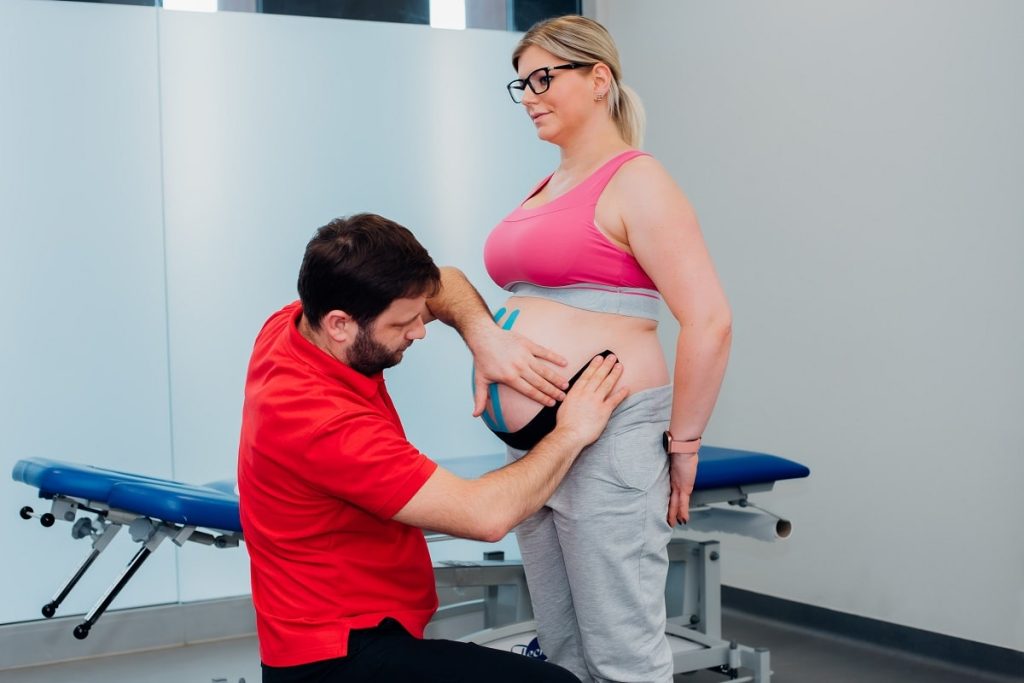
Why is it so important for women?
What is a visit to a physiotherapist like?
- During this visit, the physiotherapist will check rib mobility, lumbar muscle and fascia tension, sternum mobility, and more. This is all to ensure your changing body doesn't encounter any limitations during pregnancy.
During your pre-birth visit, your physiotherapist will check whether your pelvis can move freely.
What will a physiotherapist examine?
- Hip mobility will certainly be checked – without it, it's difficult to achieve freedom of movement throughout the pelvis. If internal rotation is limited, the pelvic outlet will certainly have limited mobility during labor.
- The coccyx – its free flexion is desirable during natural childbirth. Unfortunately, sedentary work, occasional falls, and stress limit its mobility. A blocked coccyx can cause injury to the surrounding tissues. Such blockage increases perineal muscle tension, thus increasing the risk of perineal trauma during childbirth.
- Sacrum – its mobility will ensure that the baby can pass more freely through the birth canal.
- The tension of the iliopsoas muscles – they are a kind of "tracks for the newborn baby".
Prenatal physiotherapy can improve the quality of labor, but not only that. Preparing the body for labor, ensuring good blood supply and innervation to all tissues, will significantly speed up recovery after delivery. Ensuring proper stress management during pregnancy will reduce the risk of diastasis recti.
Is this therapy safe?
- Yes. All techniques are very gentle, often created specifically for working with pregnant women.