
Redness and rash in summer. Is this a skin allergy?
Every summer I wait for the first patient with phytophotodermatosis, i.e. a severe inflammation of the skin caused by contact with a plant and then exposure to ultraviolet radiation: phyto (plant), photo (light), dermathosis (skin inflammation).
Upon receiving the diagnosis, patients are often surprised, saying, "I've never had contact with Sosnowsky's hogweed," unaware that this plant isn't the only one that can cause severe skin reactions. It's good to remember that many plants contain phototoxic substances.
The phototoxic reaction is caused by photoactive furocoumarins found in plants such as wild parsley, celery, carrot leaves, parsnips, common rue, ash-leafed dittany, chrysanthemums, wormwood, thistles, chrysanthemum, as well as the popular limes and lemons .
Who is most at risk
The disease typically appears and worsens in spring and summer. Those most at risk include harvest workers, gardeners, children, and adults sunbathing in meadows (meadow grass contains common agrimony!). It's worth mentioning those who work with lawn mowers. Often, these patients, wearing short pants, present to the clinic with numerous small skin lesions that develop where the skin comes into contact with tiny fragments of phototoxic grass. Skin lesions also occur in farmers or vendors who handle large quantities of vegetables or flowers, which can cause, for example, painful dermatitis on the hands.
Symptoms of dermatitis
Patients often present for consultations with advanced skin lesions. Initially, they experience a burning sensation, a sunburn-like sensation, pain, and itching. Redness, swelling, vesicles, and blisters appear on the skin. Skin lesions often have characteristic irregular streaks, patterns, and lines at the site of contact on the arms, legs, face, and neck.
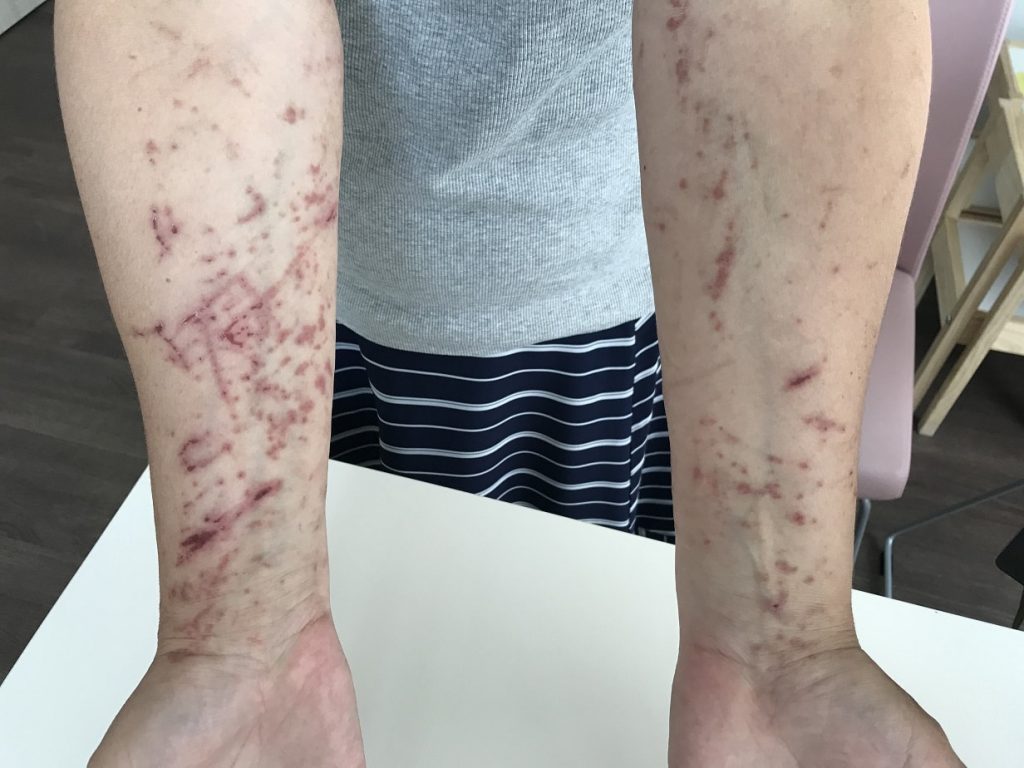
Hyperpigmentation spots (dark skin discolorations) in various forms persist for several weeks or even months. Clinical symptoms worsen upon repeated exposure to sunlight.
Reaction to Sosnowski's Hogweed
An example of a very common and well-known phytophotodermatitis is that caused by contact with Sosnovsky's hogweed. The plant originates from the Caucasus region, from where it was transported to Central and Eastern Europe, where it became invasive and spread over vast areas. It was classified in 1944, named after the Russian botanist and researcher of the Caucasus flora, Dmitry Ivanovich Sosnovsky, and described in 1970 by the Georgian and Soviet botanist Ida Panovna Mandenova. Contact with the sap of Sosnovsky's hogweed causes the release of a very large amount of phototoxins, which, upon exposure to sunlight, leads to the development of large blisters and burn symptoms that may even require hospitalization.
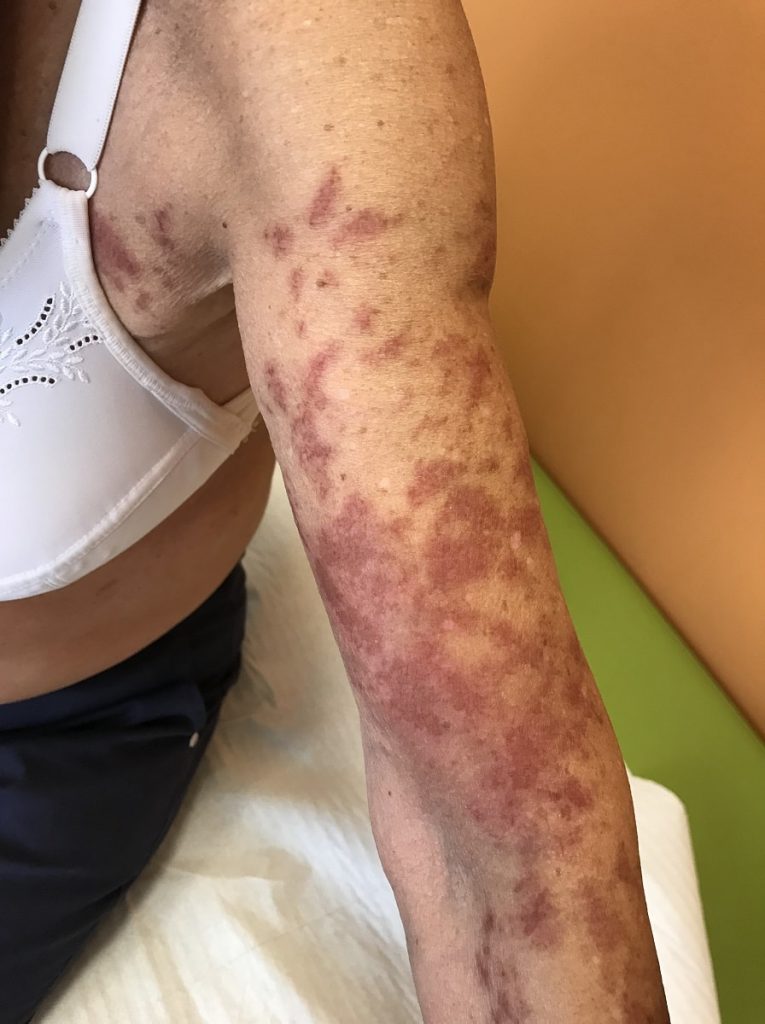
Redness and discoloration of the skin
Berloque dermatitis (French: Berloque, meaning pendant) is also worth mentioning.
In this case, dermatitis is caused by the use of cosmetics containing bergamot oil (eau de toilette, perfume, aftershave, etc.). Skin lesions appear on the neck and may initially appear erythematous, often hyperpigmented if sun exposure is minimal.
Beware of limes
Another common form of the disease is lime disease. Limes, which are also rich in bergamot oil, cause irritation. People who grow limes or prepare drinks in sunny locations, such as bartenders, are most at risk . Symptoms include the development of redness and dark pigmentation on the fingers. Lime juice, and to a lesser extent orange and lemon juice, can also cause red lips, so skin lesions may appear around the mouth.

How to deal with skin spots
It's very important to avoid further sun exposure once skin lesions appear. You should also consult a dermatologist.
Early and mild skin lesions can be treated with topical corticosteroids. However, if a more severe reaction occurs, such as blisters, they should be treated similarly to a burn. Moist compresses may be applied.
Author of the text:
doctor Nowak-Guzowska Joanna – dermatologist, pediatric dermatologist