
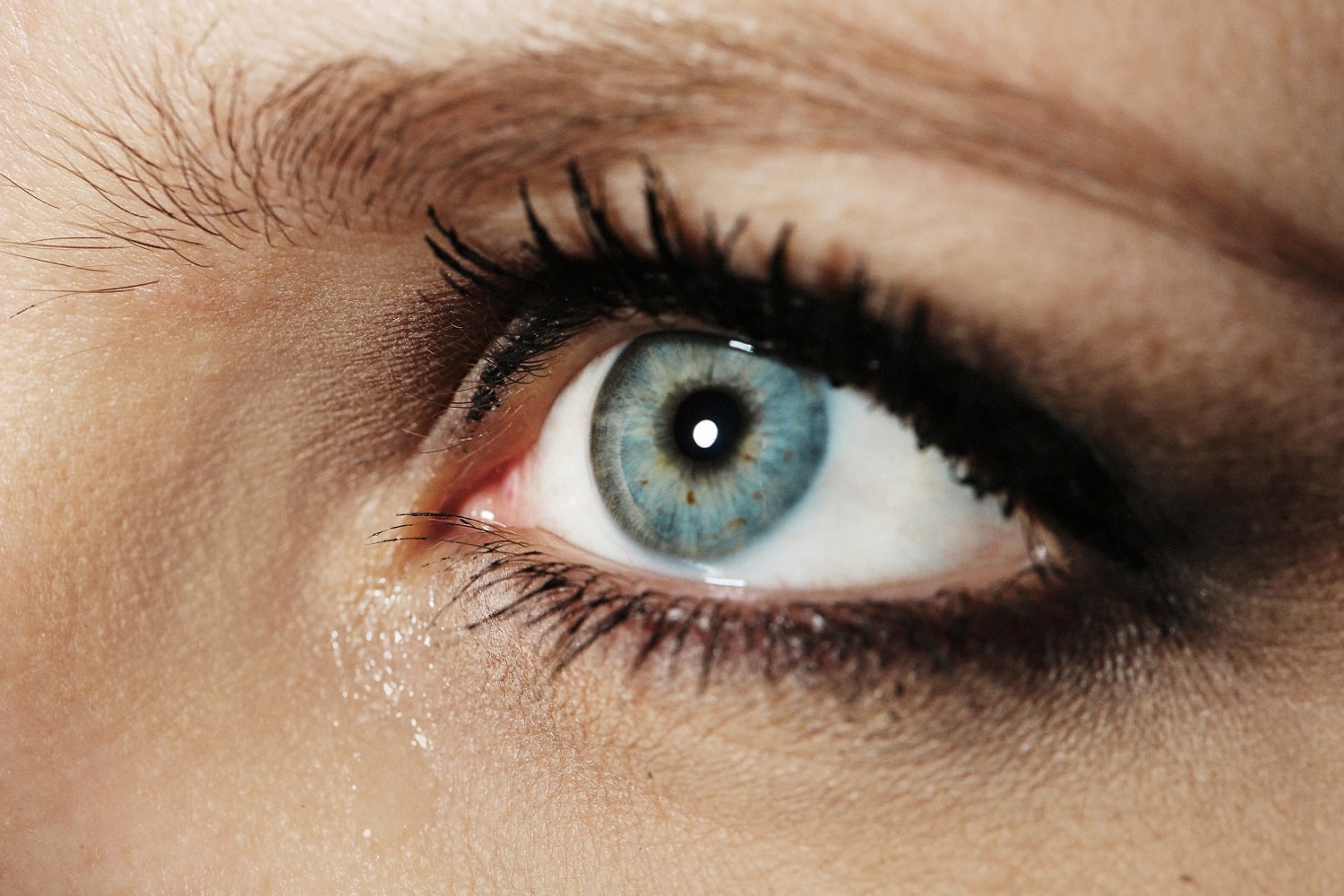
Watery eyes - causes and remedies
Our eyes water for many reasons. From emotion, while chopping onions... Tears can be chronic or intermittent, depending on the cause. Therefore, it's important to distinguish between crying, which is a symptom of an emotional reaction, and tearing. Crying can be controlled, but tearing is not so easy. Tears can be reflexive, as tears cleanse the eye of impurities, or they can be a symptom of allergies, dry eye syndrome, or serious vision damage.
Watery eyes
Constant watery eyes can be a bothersome problem, negatively impacting daily life. What exactly are tears, and why do our eyes water? Tears are produced in small quantities by the lacrimal gland. Their composition is constant and consists primarily of water, small amounts of sodium chloride, and protein. Like the eyelids, they form a natural protective barrier on the eye's surface, creating a tear film.
The tear film ensures proper lubrication of the cornea and conjunctiva, and cleanses the ocular surface. It also protects against infections such as conjunctivitis. It consists of three layers: aqueous, mucous, and fatty. Excess tears are drained through the drainage system: the tear ducts, lacrimal sac, and nasolacrimal duct. This process is imperceptible. Excessive tearing, or tears, is the result of excessive production of fluid in the lacrimal gland, which the tear ducts cannot drain.
The sun also matters - causes of watery eyes
UVA (95%) and UVB (5%) radiation have a negative impact on the eyes. We are exposed to them year-round. In winter, reflected radiation, for example from snow, also has a negative impact on the eyes. In summer, radiation reaches the eyes through direct exposure.
The summer sun is strongest during the midday hours, but in the mornings and afternoons it's lower in the sky – it hits our eyes more easily (though with less intensity). It's also dangerous near water, as both sand and water reflect sunlight, thus amplifying its harmful effects. In the mountains, you also need to be careful – the thinner air allows more radiation to pass through.
Eye protection is therefore essential. When leaving the house, wear sunglasses with certified UV filters (400 or higher) and anti-reflective coatings.
Excessive exposure to sunlight leads to tearing, irritation, redness, and photophobia, and can lead to eye diseases. These symptoms may indicate solar conjunctivitis.
How to get rid of excess tears? Ways to deal with tearing
Ways to deal with watery eyes depend on the factor that causes them.
For dry eye syndrome, the use of so-called artificial tears, eye drops that supplement the tear film, is recommended. When choosing them, make sure they are preservative-free. Drops should be administered regularly, four to five times daily.
If watery eyes are caused by allergies, you should wash your eyes with saline or moisturizing drops (sodium hyaluronate eye drops).
What drops should I use?
The purpose of eye drops is to restore the tear film's balance, moisturize the eye's structure, and provide protection from external factors, such as contact lenses. Choosing the right drops for your problem is crucial for your vision and eye health.
When choosing drops, it is worth considering several aspects:
- You should choose preservative-free eye drops to minimize the risk of side effects (especially in allergy sufferers).
- It is recommended to choose drops whose main ingredient is hyaluronic acid or its sodium salt in an appropriate concentration (which is a natural component of the tear film).
- An alternative substance to hyaluronic acid may be trehalose, which protects cells against water loss.
Instead of eye drops, you can use gel preparations . They stay on the eye's surface longer, thus better moisturizing tired eyes. Applied at night, they regenerate irritated eyes.
What else can you do for eye health and vision?
In addition to using moisturizers, it is worth:
- use cold gel compresses,
- limit the use of herbal or tea compresses (they may cause dry eyes and allergies),
- take care of the environment and protect your eyesight by, for example, installing air humidifiers, appropriate lighting, and as much daylight as possible,
- buy good quality glasses with a UV filter,
- avoid heavily air-conditioned rooms, dry air can cause more frequent irritation and discomfort in the eyes,
- reduce the time of exposure to sun or wind,
- in periods of increased tearing problems, replace contact lenses with glasses,
- hydrate the body,
Watery eyes may be related to health problems, so it is necessary to consult a doctor.
How to use eye drops?
- First of all, remember to wash your hands thoroughly before and after applying the medicine.
- You should never share medication drops with other people.
- Tilt your head back when instilling the drops.
- It is very important to maintain the appropriate distance between the applicator and the eye – approximately 1-2 cm.
- The capacity of the conjunctival sac is only 1 drop, so only 1 drop needs to be applied.
- The drops should be applied closer to the inner corner of the eye.
- Immediately after applying the drops, gently press the tear duct for a moment to prevent the drops from entering the tear ducts.
- It is a good idea to close your eyelids for several seconds after applying the drops so that the medicine is distributed over the surface of the eyeball.
Medical consultation
by Dr. Monika Polak, MD,
PhD, Ophthalmology specialist