
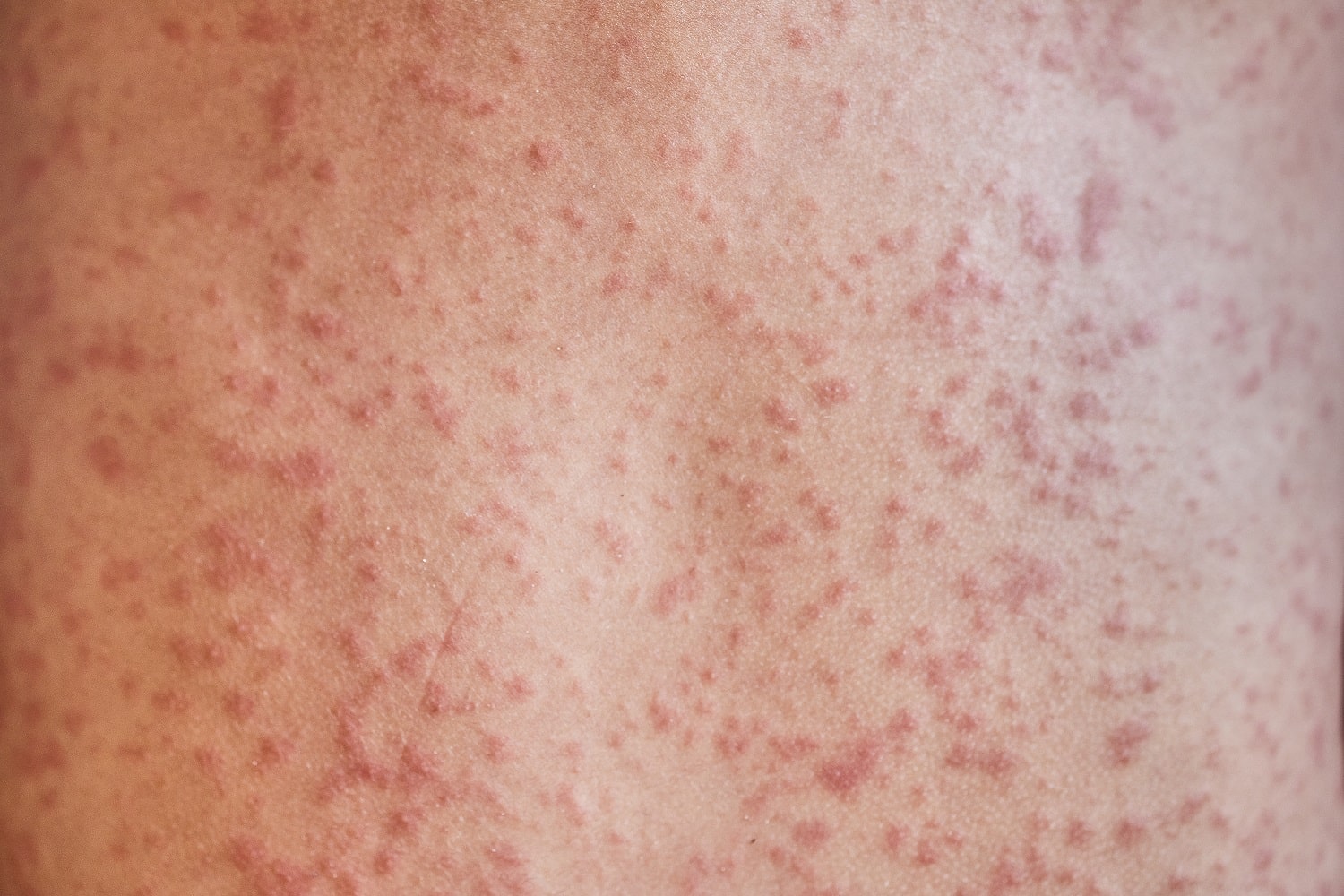
Measles – an infectious disease. Are we at risk of a measles epidemic?
Measles is a viral disease that spreads easily and can cause epidemics. It should not be taken lightly, as complications associated with it can be very serious.
How can you become infected with the measles virus?
Humans are the sole reservoir of the measles virus, which is transmitted through respiratory droplets (coughing, sneezing) and through direct contact with nasal or throat secretions, or urine from an infected person. It can take 10-12 days from infection to the onset of the first symptoms. An infected person is infectious for approximately four days before symptoms appear.
Symptoms of measles
The characteristic measles rash may be preceded by fever, malaise, conjunctivitis, runny nose, and cough. As the disease progresses, the temperature rises to 39-41°C. White patches surrounded by a red line (Koplik's spots) appear in the mouth, and then the red rash gradually merges into spots and covers the entire head and body.
Measles infection can lead to complications such as secondary bacterial pneumonia, otitis media, encephalitis, myocarditis, miscarriages, and a condition called subacute sclerosing panencephalitis (SSPE).
SSPE is a progressive, usually fatal brain disorder. It appears 7 to 10 years after infection and leads to death within 3 years of symptom onset. Patients experience behavioral changes, cognitive decline, and vision problems. They may also develop advanced neurological symptoms, such as severe spasms and, ultimately, severe physical and mental impairment, leading to death.
Protective vaccinations
The Chief Sanitary Inspectorate is urging people to get vaccinated. The measles vaccine is available in a combined form, the measles, mumps, and rubella vaccine. It contains live, weakened viruses. The measles vaccine is a mandatory (free) vaccination administered to children in Poland according to the current vaccination schedule (two doses: the first at 13-14 months of age and the second at 6 or 10 years of age). Due to the increased incidence of measles this year, a decision was made to administer the second dose earlier, at age 6. Vaccination effectiveness after two doses is 98-99%.
According to GIS data, 128 cases of measles were recorded between January and October of last year. There were 58 cases in the same period in 2017. The rising number of measles cases is linked to an increase in parents refusing to vaccinate their children, as well as population migration from areas with high measles incidence.
Before widespread measles vaccination was introduced in Poland in 1975, thousands of people were infected. Surviving measles provides lifelong immunity.
However, if you do not remember whether you were sick or were not vaccinated, you should:
– see your doctor,
– perform a measles antibody test,
– undergo preventive vaccination.
For full immunization, two doses of the vaccine must be taken.
Please remember that:
- Measles mainly affects unvaccinated people,
- measles is especially dangerous for people with a weakened immune system,
- in 2017, the number of people with measles in Europe increased fourfold compared to 2016,
Antibody test
It allows for the detection of measles virus infection. The presence of IgM antibodies indicates a recent infection with the virus, while IgG antibodies are found in patients who have had measles or after vaccination.
Antibodies against the measles virus are present in the serum of almost all patients during and after infection. IgM antibodies appear immediately after the onset of symptoms and can be confirmed by ELISA or indirect immunofluorescence testing (IIFT). In 50% of patients, IgM antibodies appear within three days, and in over 90% within 10 days—after the appearance of the rash. The measles ELISA (IgM) test is a faster and more sensitive test for diagnosing measles than other available tests. IgG and IgM anti-measles virus antibodies are reliable markers for detecting measles infection.
The level of antibodies in the serum of people vaccinated against the measles virus is 8 to 10 times lower than in people who have had measles.
Medical consultation
doctor Magdalena Szabała
Family medicine

Frequently asked questions – FAQ
What is measles?
Measles is a viral disease that spreads very easily. It can cause high fever, cough, runny nose, conjunctivitis, and a characteristic rash.
How can you get measles?
The measles virus is transmitted primarily through droplets, such as coughing and sneezing, and through contact with the secretions of an infected person. Measles is one of the most contagious viral diseases.
When do measles symptoms appear?
The first symptoms of measles usually appear about 10–12 days after infection. A person with measles may be infectious to others even before the characteristic rash appears.
What are the symptoms of measles?
The most common symptoms of measles include fever, malaise, runny nose, cough, conjunctivitis, photophobia, Koplik's spots in the mouth and a red rash that gradually covers the head and body.
What are Koplik spots?
Koplik's spots are small, whitish lesions in the mouth surrounded by redness. They may appear before the rash and are one of the characteristic symptoms of measles.
What complications can measles cause?
Measles can lead to complications such as pneumonia, otitis media, encephalitis, myocarditis, and in pregnant women, also to obstetric complications.
Does vaccination protect against measles?
Yes. Vaccination against measles is the primary method of prevention. In Poland, a combined vaccine against measles, mumps, and rubella is used, administered according to the vaccination schedule.
When should you see a doctor if you suspect measles?
You should consult a doctor if you experience a fever, cough, runny nose, conjunctivitis, a rash, or contact with someone with measles. It's a good idea to inform the facility in advance if you suspect you have an infectious disease.