
How to get back in shape after a long period of physical inactivity?
Have you checked your muscle length yet?
In recent months, a significant number of patients visiting physiotherapists have complained of back pain. If you work or have worked from home for a long time and have significantly limited your physical activity, this may be the main cause of these symptoms. So what's the best solution?
Get active!
But is it safe for you after such a long break?
Let's make sure it is!
The first choice in such situations is running and cycling. We'll focus on the former, which is definitely good for us, provided that:
- our hip, knee and ankle joints have full physiological mobility,
- the hamstrings and hip flexors are the correct length,
- we have active muscles that stabilize the lumbar section, the so-called "core",
- we will prepare the respiratory and circulatory system for such great effort.
These are important elements that should function properly in our body so that we do not injure ourselves or aggravate back pain while running.
Joint and muscle pain, shortness of breath during exercise?
In such a situation, you can consult a physiotherapist to assess your joint mobility, muscle and flexor length, and lumbar muscle activity, among other things. The physiotherapist will interview you, examine you, and suggest what can be done to improve your joint mobility and how to intensify your physical activity.
In short, we'll tell you how to check if your joints and muscles are ready for running.
How to check your muscle length yourself?
You can perform a few basic movements yourself to assess muscle length, mobility in the joints of the lower limbs and the activity of the stabilizers:
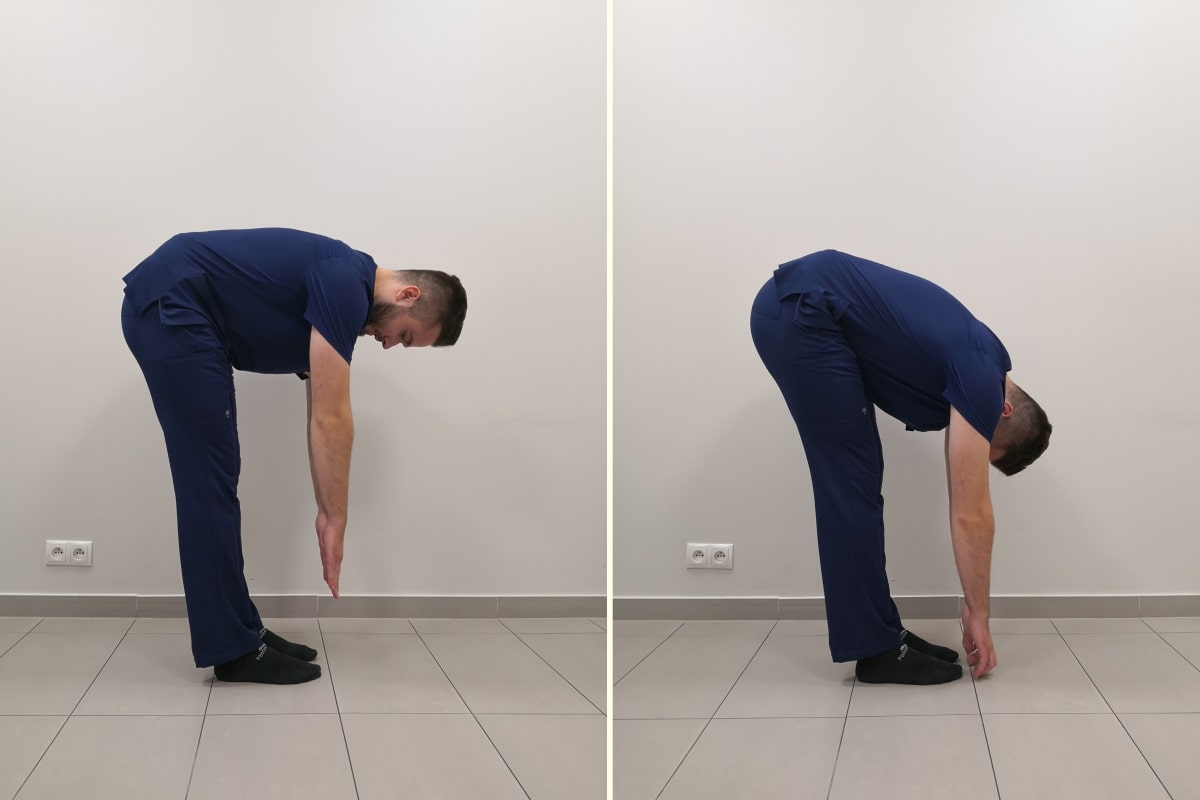
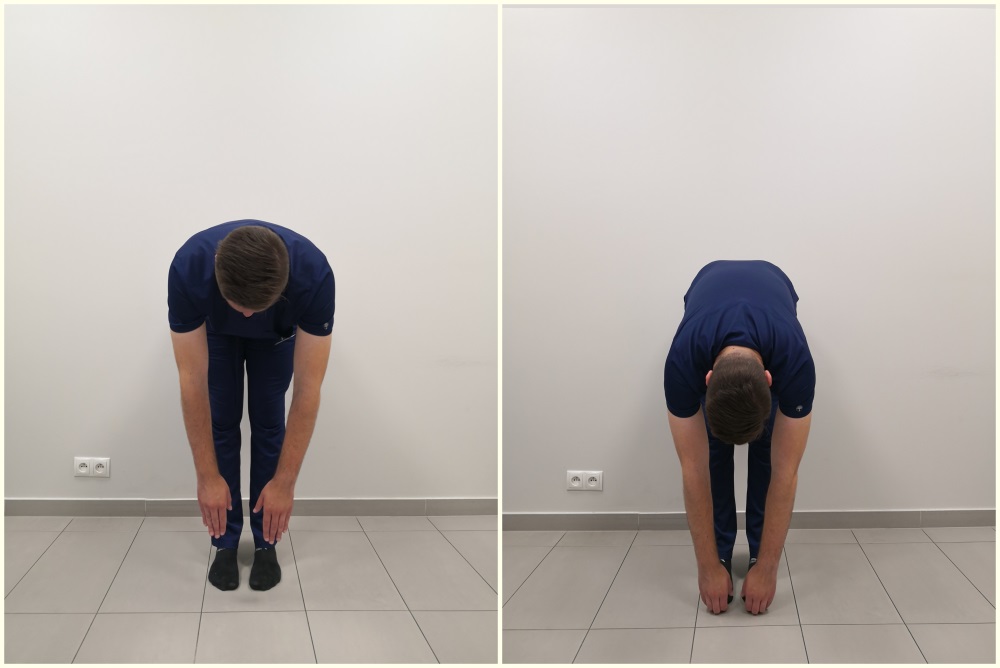
The PP (toes-to-floor) test – stand with your feet hip-width apart and try to touch the ground with your toes. If you're a few centimeters short, don't worry.
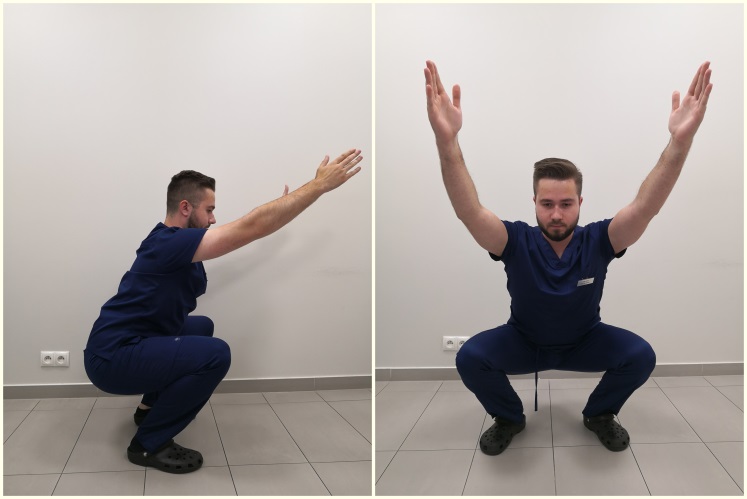
The squat test – an exercise everyone knows, but unfortunately, its correct execution is not. A properly performed squat requires full mobility in the hip, knee, and ankle joints. Stand with your feet shoulder-width apart and parallel to each other. Throughout the squat movement, your heels should remain in contact with the ground, and your knees should not collapse inward.
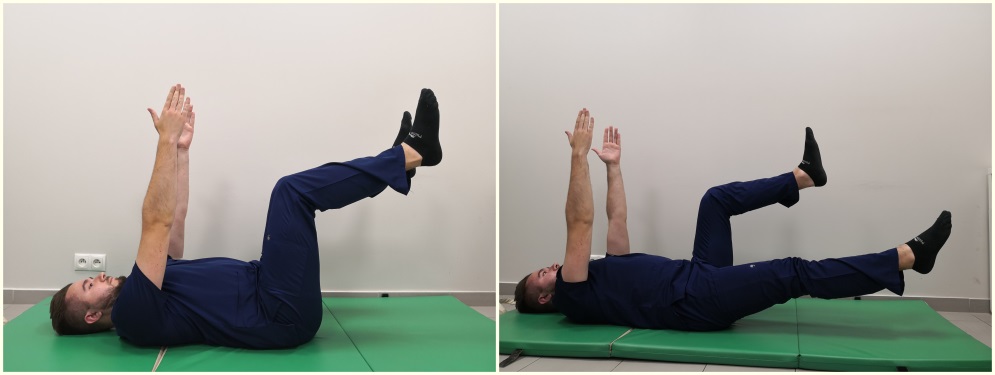
Test your lumbar stabilization muscle activity – lie on the floor, extend your arms in front of you (towards the ceiling), and bend your hips and knees 90 degrees (as if you were sitting in a chair). Press your lumbar spine firmly into the floor, leaving no gap. Try straightening one leg so that your heel is a few centimeters above the floor, keeping your back pressed in. If you succeed, try adding the other leg. Notice if your lumbar spine lifts towards the ceiling as your lower limbs move. This means your stabilization muscles aren't in the best shape and it's time to work on them.
If you have performed these 3 simple tests and something is bothering you, a visit to a physiotherapist will certainly help.
How to start training safely
If everything is working properly and your muscles and tendons are at the right length, you're almost there. Before you embark on your running or cycling adventure, ensure you're getting the right intensity at the beginning.
Here are some tips: …
- Always start physical activity such as running, cycling, or swimming with a general warm-up – not with static stretching, leave that for the end.
- Start your physical activity with gentle workouts:
- in the form of walking: 3 times a week for 3 weeks,
- 2-3 walk-run training sessions over a period of 3 weeks, consisting of alternating walking and running, e.g. 2 minutes of running and 2 minutes of walking for 20-30 minutes,
- the next stage is interval running – e.g. 2 minutes of running followed by 1 minute of easy jogging, repeating this sequence about 8-10 times,
- continuous running – we can control the intensity of such training by adjusting, for example, the running pace, distance, and the terrain on which we run.
- Cooling down – after each training session, you should calm down your body by calmly static stretching the muscle groups that worked harder; breathing exercises are also a good solution at the end.
Each of us is completely different, and it's safest when the type of physical activity and training intensity are individually tailored to you by a physiotherapist. If you experience pain/discomfort, joint swelling, or other symptoms during or immediately after exercising, it's a sign that something is wrong and you should consulta specialist.
Author of the text:
Fabian Burakowski,
Physiotherapist
Frequently asked questions – FAQ
How to get back in shape after a long break?
It's best to start gradually, with light activity and shorter workouts. After a break, the body needs time to re-acclimate to exercise and reduce the risk of overexertion.
Can you run straight away after a long break?
It's best to introduce running cautiously. Before starting, carefully assess your joint mobility, muscle length, stabilizing muscle function, and overall fitness.
Why can your spine hurt after inactivity?
Prolonged sitting and limited movement can weaken stabilizing muscles, increase tissue tension, and limit joint mobility. This can contribute to back pain, particularly in the lumbar region.
How to check if your body is ready for activity?
It's important to pay attention to joint range of motion, muscle tension and length, balance, core stability, and breathing during exercise. A physiotherapy consultation may be helpful.
What are core muscles?
The core muscles are the stabilizing muscles of the trunk and lumbar spine. Their proper functioning helps maintain movement control, body stability, and safer exercise performance.
How to avoid injuries when returning to training?
It is worth increasing the intensity gradually, remembering to warm up, regenerate, do strengthening and stretching exercises, and not ignoring pain, shortness of breath or obvious fatigue.
When should you see a physiotherapist?
It is worth seeing a physiotherapist if you experience pain in your spine, joints or muscles, limited mobility, shortness of breath during exercise, returning from an injury or if you have doubts about how to safely start an activity.
What activity is good to start with after a break?
Walking, gentle cycling, mobilizing exercises, core strengthening, and light general conditioning are all good starting points. It's best to match your activity to your health and abilities.