

Melanoma – the most dangerous skin cancer. Find out if you're at risk.
This cancer is the most serious oncological problem in dermatology.
Over the past 30 years, the incidence and mortality rates of the disease have increased. Early detection followed by appropriate excision can lead to cure rates of up to 90%, especially in low-risk melanomas. explains what melanoma is, what should raise concerns, and what tests to perform. dermatologist in LublinJoanna Nowak, MD,
Skin cancer - causes
Repeated, short, intense sun exposure and severe burns in childhood play a significant role in the development of melanoma and are a major risk factor. Visiting a tanning bed, being Caucasian (phototype I, II), being female, having more than 50 moles, and having atypical moles are other risk factors for skin cancer.
It's also worth mentioning a familial genetic predisposition to melanoma. Genetic studies have confirmed that carrying the CDKN2A gene is associated with an increased incidence of cutaneous melanoma.

How to recognize if it is melanoma?
In women, melanoma is most often located on the limbs, while in men, the most common location is the trunk.
Melanoma usually appears de novo, meaning on otherwise intact skin, but it can develop in conjunction with a melanocytic nevus. This is a nevus composed of pigment-rich cells called melanocytes, commonly known as a "mole."
Skin cancer – types
We associate melanoma with the color black and there are actually 4 basic types of melanoma:
- originating from a malignant lentigo (usually on the face),
- superficially spreading melanoma,
- nodular melanoma (on the skin of the lower limbs, upper limbs or trunk),
- acral melanoma (on the feet – as in the photo – or hands).
There are also apigmented melanomas, which are red in color, and verrucous melanomas, which resemble viral warts. Melanomas can occur on the mucous membranes of the oral cavity and the anogenital area. Pre-existing melanoma can progress rapidly during pregnancy. Melanoma in children is rare.
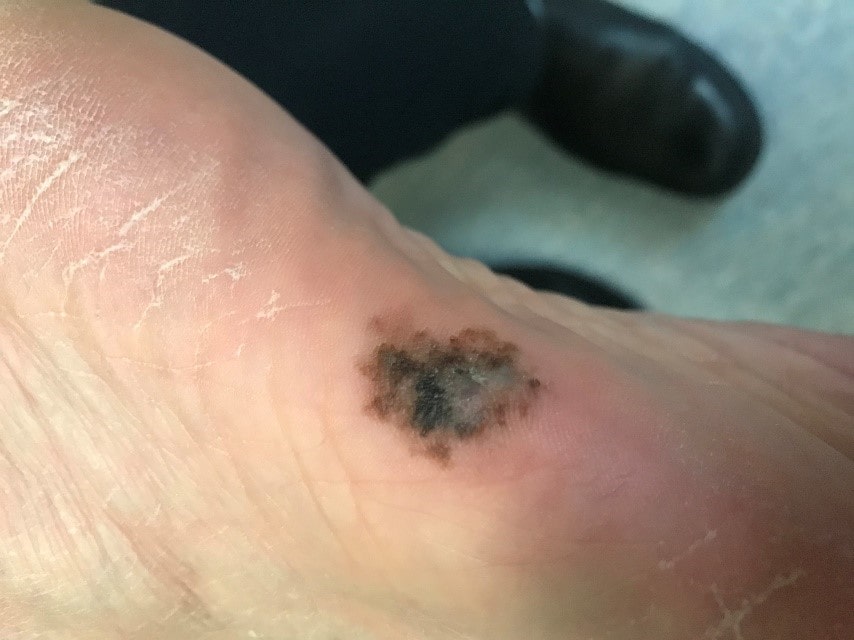
What does skin cancer look like? What might we be concerned about?
1) Changes within an existing mole, referred to as ABCD:
- A – asymmetry – change in the shape of the mole from round to asymmetrical
- B – edges – uneven, jagged edges of the mole
- C – color – changes in the color of the mole: darkening, lightening, various shades of red, non-uniform color
- D – size, diameter of the mole > 6 mm
2) Newly formed mole
Melanoma prevention
Thanks to prevention, we can protect ourselves against skin cancer, which involves:
- protection against UV radiation (creams with an appropriate sun protection factor, SPF), which prevents sunburn,
- self-examination of moles and the entire skin of our body and regular specialist visits (dermatologist, oncologist),
- Mole examination – dermatoscopy or videodermatoscopy – undoubtedly plays the most important role in diagnosing disturbing pigmented lesions, including melanoma. This examination allows for the differentiation of common, harmless pigmented moles from atypical ones, which has significantly improved the effectiveness of preoperative mole diagnostics.
Remember that you should use good sunscreen products year-round. Excessive exposure to sunlight, regardless of the season, causes accelerated aging. Unprepared skin is more susceptible to sunburn, which in turn increases the risk of melanoma.

Frequently asked questions – FAQ
What is melanoma?
Melanoma is a skin cancer that originates from pigment cells. It can appear on previously unaffected skin or develop within an existing mole, commonly known as a birthmark.
Why is early detection of melanoma important?
Early detection of melanoma increases the chances of successful treatment. Therefore, regular skin monitoring, mole inspection, and dermatological consultations are important if any concerning changes occur.
What increases the risk of developing melanoma?
The risk of melanoma is increased by factors such as intense sun exposure, sunburn, use of tanning beds, light skin phototype, a large number of moles, atypical moles, and a family genetic predisposition.
Does melanoma always arise from a mole?
No. Melanoma can develop within an existing mole, but it often appears on previously unaffected skin as well. Therefore, it's important to monitor not only moles but also the entire skin.
Is melanoma always black?
No. Melanoma can come in many colors and forms. It can be dark, multicolored, red, colorless, or resemble another skin lesion. Therefore, any worrisome change should be consulted with a dermatologist.
What changes in a mole should cause concern?
Signs of concern include asymmetry, uneven edges, color change, enlargement, a diameter greater than 6 mm, bleeding, itching, or a rapid change in appearance. The ABCD rule is helpful in assessing moles.
What test helps assess moles?
Dermatoscopy and videodermatoscopy are used to assess moles. These tests help assess the nature of the skin lesion and determine whether it requires further diagnosis or removal.
How to reduce the risk of melanoma?
The risk of melanoma can be reduced by protecting the skin from UV radiation, avoiding solariums and sunburn, using sunscreen, wearing protective clothing and regularly checking moles.