

Carpal tunnel syndrome
Compression neuropathy of the median nerve at the level of the carpal tunnel is another name for carpal tunnel syndrome. The condition affects both women and men, of all ages. It affects the hand and causes significant discomfort in everyday life. Patients often report difficulty grasping, objects slipping out of their hands, and numbness in the fingers. These may be the first symptoms of carpal tunnel syndrome.
Carpal Tunnel Syndrome - Causes
Carpal tunnel syndrome results from prolonged pressure on the median nerve, located in the carpal tunnel. Common causes include swelling caused by inflammation of the nerve or surrounding tissue, fractures of the radius, ulna, or wrist, as well as fibrosis and degeneration. The condition can also be caused by excess inflammatory fluid accumulating in the wrist during rheumatoid conditions (e.g., rheumatoid arthritis, gout).
Factors contributing to the development of carpal tunnel syndrome can also be identified. These include hormonal imbalances, vasomotor and musculoskeletal disorders, advanced age, and excess body weight.
One possible and common cause of carpal tunnel syndrome is considered to be prolonged, excessive, and unilateral strain on the small muscles of the hand and forearm. Therefore, carpal tunnel syndrome can also be an occupational disease. Typists, keyboard players, and those working in hairdressing salons, construction sites, or factories are particularly susceptible to it. Recovery may often require surgical treatment.
Pregnant women may complain of carpal tunnel syndrome, especially during the third trimester, which is associated with the occurrence of swelling during pregnancy.
Carpal Tunnel Syndrome - Symptoms
Patients primarily complain of numbness and pain in their fingers. They often dismiss these symptoms, attributing them to poor sleeping position. Symptoms of carpal tunnel syndrome include:
- tingling and numbness of the fingers – from the first to the middle of the fourth finger (the syndrome does not affect the little finger),
- weakened grip strength,
- lack of precision in hand movements,
- difficulty in making a fist,
- objects falling out of hand,
- atrophy of the thenar muscles, which causes the thumb to cease to be an opposable finger and to be positioned in one plane with the other fingers (the so-called monkey hand effect).
The symptoms associated with tunnel syndrome worsen at night and after elevating the limb. Lowering the hand and making a flicking motion provide relief. In the second stage, symptoms worsen, with pain and numbness in the fingers becoming more frequent. Symptoms also occur during the day.
Diagnosis and treatment of carpal tunnel syndrome
The diagnosis of carpal tunnel syndrome primarily consists of a medical history and a physical examination of the patient's joint performed by an orthopedic specialist in Lublin or a hand surgeon, as well as tests such as ultrasound and electromyography (EMG of the median nerve), which measures muscle function and conduction in peripheral nerves. All tests can be performed at the Luxmed Medical Center.
The therapy uses Super Inductive SIS Stimulation and physiotherapy (available at the CM Luxmed facility, ul. Zwycięska 6A).
In many cases, surgery is an effective treatment for carpal tunnel syndrome. The procedure is usually performed as a day surgery under local or regional anesthesia and is a safe procedure. Proper rehabilitation is necessary after the procedure.
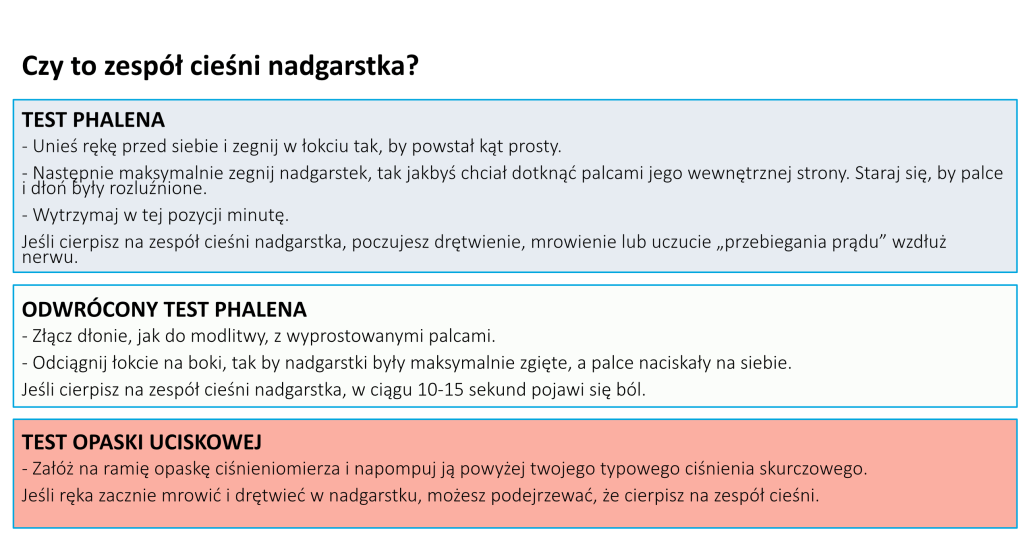
Preventing carpal tunnel syndrome
Carpal tunnel syndrome is often a comorbid condition, so it's important to take care of your overall health. Prevention includes:
- maintaining a healthy weight,
- maintaining correct body posture,
- ensuring proper hand positioning while working,
- physical activity,
- making sure to distribute the load evenly on both hands.
Modern medicine offers many tools to combat carpal tunnel syndrome, but the key to success is early diagnosis and appropriate treatment. Patients who begin treatment on time and follow their doctor's recommendations often recover fully without the need for surgery.
Therefore, it's important not to ignore symptoms and to consult a specialist regularly, especially if our daily activities put us at risk of developing carpal tunnel syndrome. Prevention education and regular checkups are key to avoiding serious complications and maintaining healthy hands throughout life.
Medical consultation
Specialist in orthopedics and traumatology
Frequently asked questions – FAQ
What is carpal tunnel syndrome?
Carpal tunnel syndrome is a compression neuropathy of the median nerve in the carpal tunnel. It results from prolonged pressure and can cause pain, numbness, and weakness in the hand.
What are the causes of carpal tunnel syndrome?
The cause may be swelling and inflammation of the nerve or surrounding tissues, injuries and fractures in the wrist area, degenerative changes, rheumatoid diseases, as well as long-term overload of the hand and forearm.
Who is at risk of carpal tunnel syndrome?
The risk is higher for people working at a computer, playing instruments, performing repetitive hand movements, physical work, as well as people with excess body weight, hormonal disorders or rheumatoid diseases.
What are the symptoms of carpal tunnel syndrome?
Symptoms may include tingling, numbness and pain in the fingers, weakened grip, lack of precision in hand movements, difficulty making a fist and objects falling out of the hand.
Which fingers go numb with carpal tunnel?
Numbness and tingling usually affect the first to mid-fourth fingers, which include the thumb, index finger, middle finger, and part of the ring finger. Carpal tunnel syndrome usually does not affect the little finger.
When do carpal tunnel symptoms get worse?
The symptoms often worsen at night and after elevating the limb. Lowering the arm and making a "shutting" motion may provide relief.
How is carpal tunnel syndrome diagnosed?
Diagnostics include a medical interview, a physical examination of the wrist, and additional tests such as ultrasound and electromyography, i.e. EMG of the median nerve.
How is carpal tunnel syndrome treated?
Treatment depends on the severity of symptoms. It may include physical therapy, SIS therapy, hand weight-bearing, and, in more advanced cases, surgery and subsequent rehabilitation.